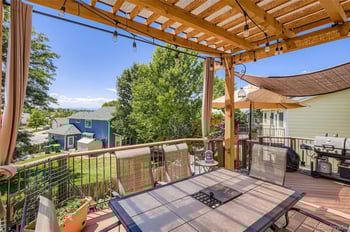
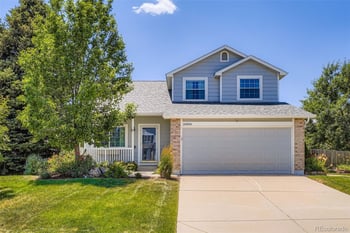
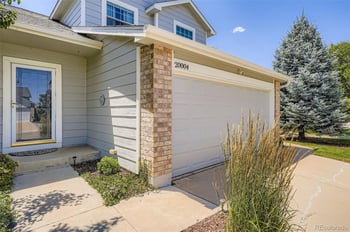
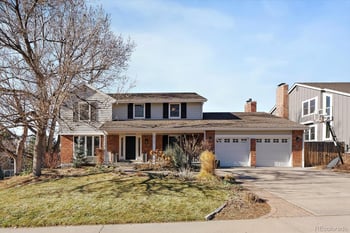
$615,000
Active Under Contract
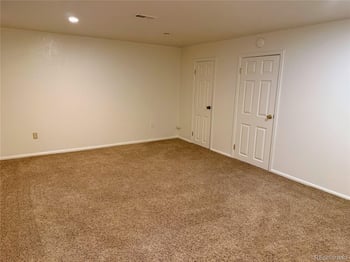
4
Beds
4
Baths
2745
Sqft
0.16
Acres
20004 Tufts Dr, Centennial, CO 80015
MLS#: REC7119254
Centennial CO homes for sale spread across the south Denver area where day-to-day life is shaped by two things: how quickly you can get onto I-25 or I-225, and how easy it is to stay local when you do not feel like driving far. A lot of residents treat The Streets at SouthGlenn (at Arapahoe Road and University Boulevard) as the default place for dinner, errands, or a low-key night out, while Dry Creek Station gives commuters a rail option when traffic is not worth the hassle. Outdoors time is not a special trip here either—Centennial Center Park is a real go-to for an evening walk or taking kids outside, and the High Line Canal Trail cuts through the area in a way that makes quick runs and bike rides feel built into normal life. The main trade-off is timing: Arapahoe Road, Dry Creek Road, and the on-ramps can back up fast during the workday and school rush, so the “best” part of Centennial often comes down to which side streets you use and how close you want to be to the main roads. If you want a steady, suburban feel that still keeps the Tech Center and the rest of Denver within easy reach, scroll below to view current Centennial listings.

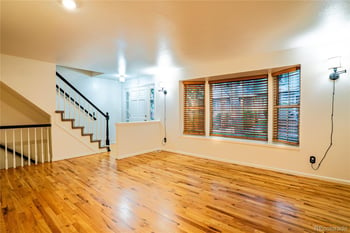
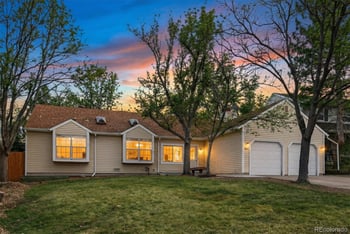


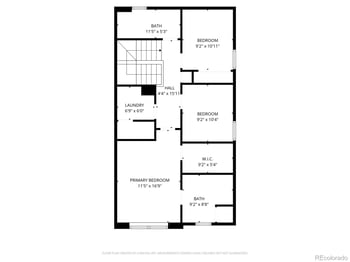
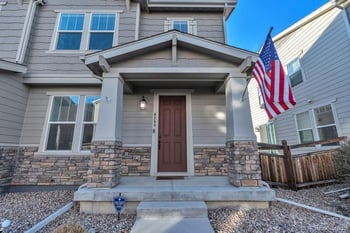
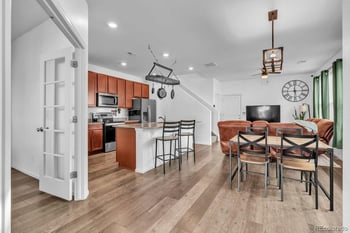

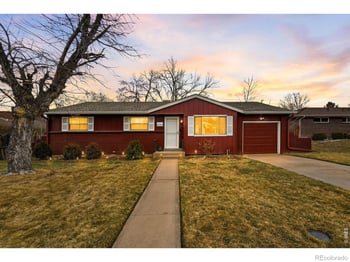
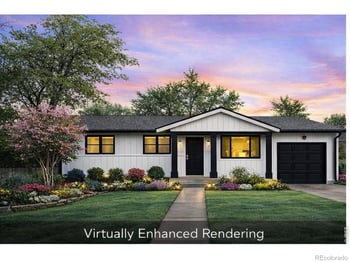

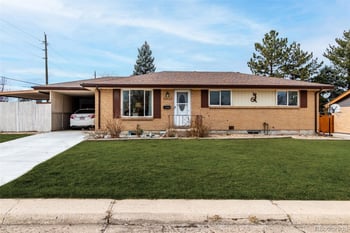
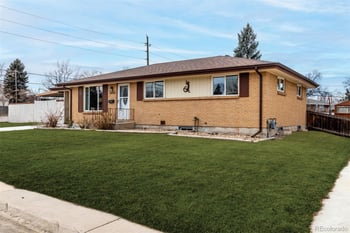
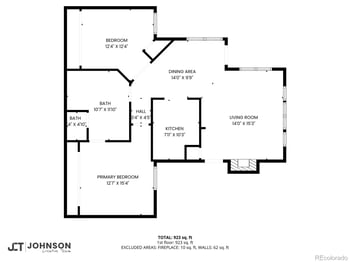
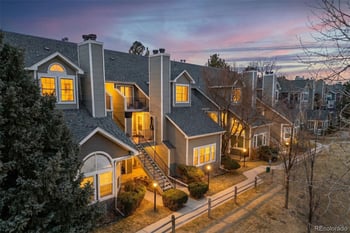


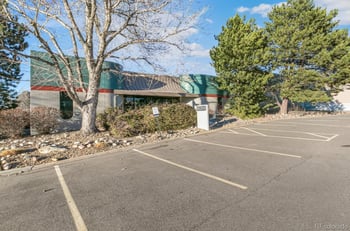
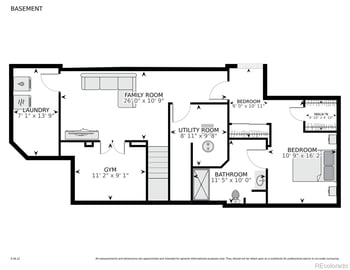
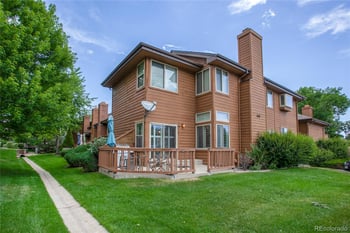
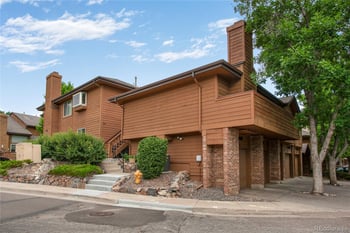
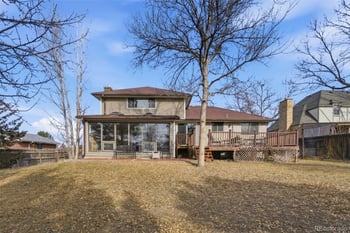
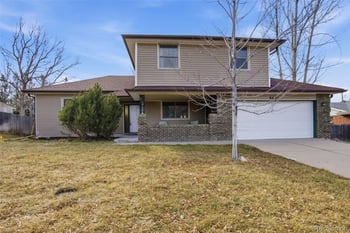
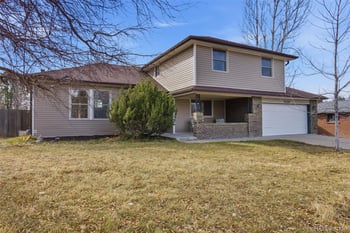


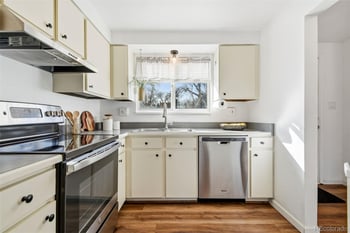
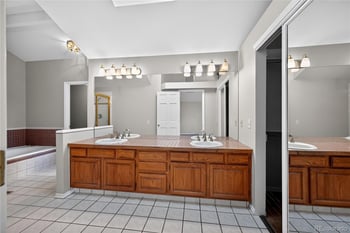
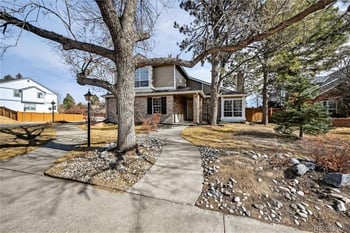
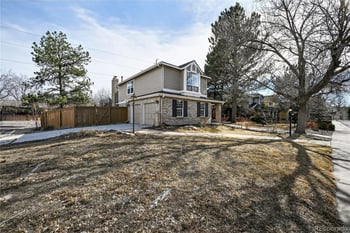

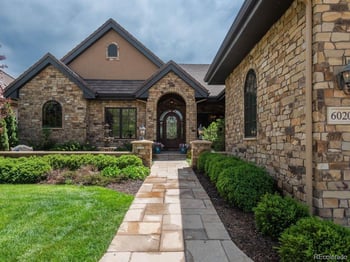
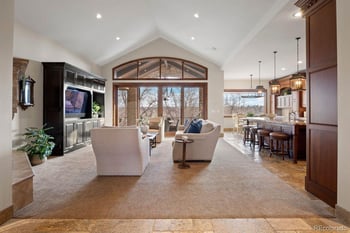

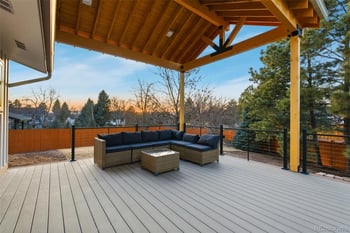
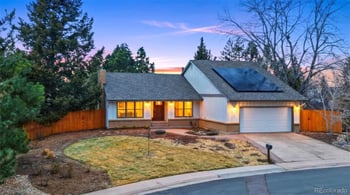
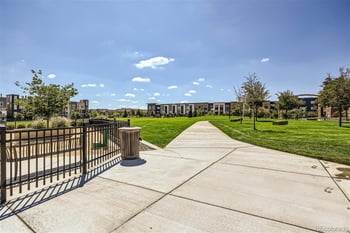
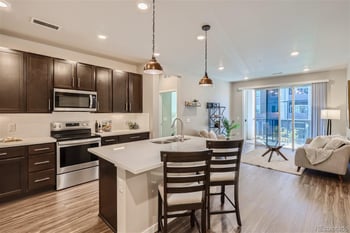
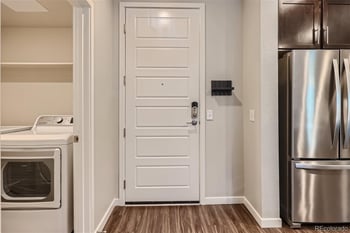
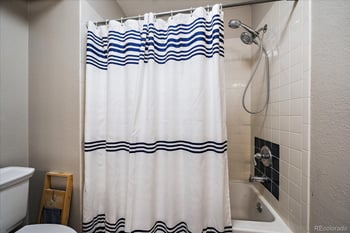
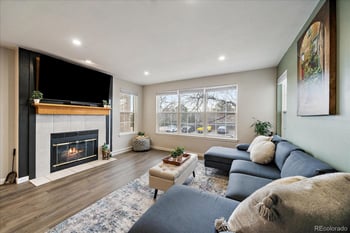



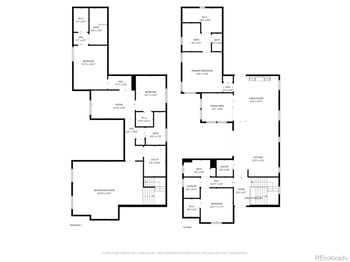
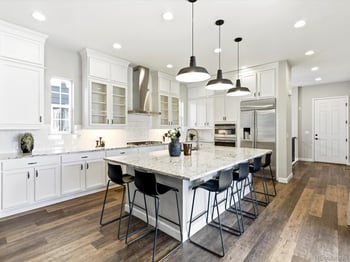
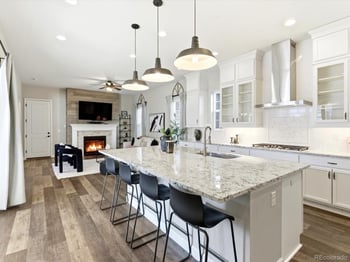
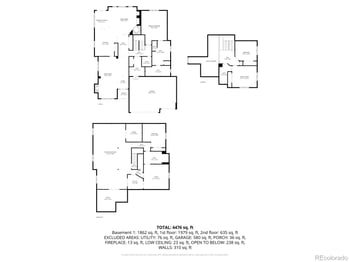
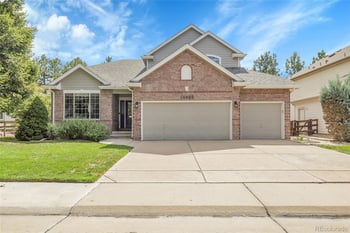
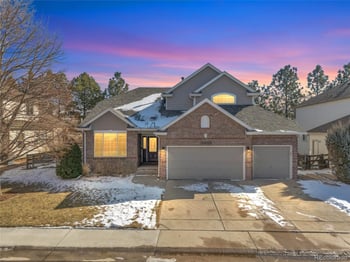

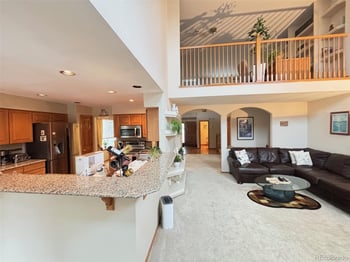
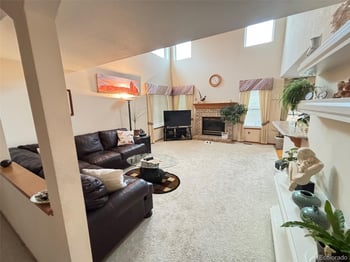
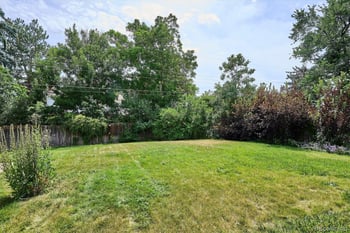

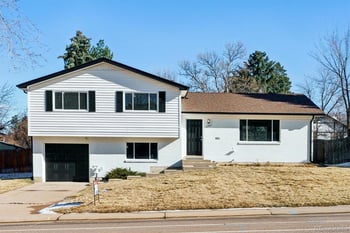
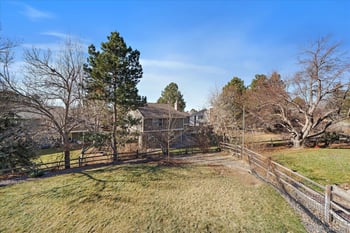
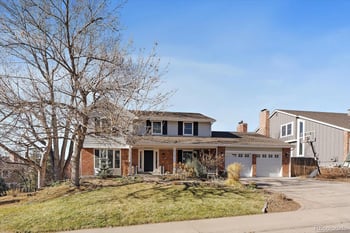


Centennial tends to fit buyers who want a practical, settled home base: straightforward errands, predictable routines, and neighborhoods that don’t feel like they’re constantly turning over. The trade-offs are real, though—Centennial is a “pockets” city, and the week can feel very different depending on which routes, nodes, and noise inputs you live near.
If your ideal week is quick errands, easy appointments, and “get home without a production,” Centennial usually plays well—especially when you’re close to your default nodes.
Centennial doesn’t function like a single Main Street city. It’s more about corridor access and nodes (shopping, parks, trails) than a central walkable core.
Many pockets feel calm, but “easy access” often means living closer to bigger connectors. If you’re noise-sensitive, treat that as a touring check, not an assumption.
For many residents, The Streets at SouthGlenn becomes a repeat-use “default stop.” Your satisfaction usually tracks whether your most common trips stay simple from home.
If the “long-game” is fewer stairs, verify the real daily paths: garage → kitchen, bedroom → laundry, bedroom → shower. A layout can be called “main-floor” and still live like stairs.
Don’t let “Centennial” (mailing or marketing) do the thinking. Confirm district assignment by address, confirm the utility district/provider, and read HOA coverage in writing if applicable.
Buyers often compare nearby options based on what feels “off” here: Greenwood Village/Englewood for different access patterns, Littleton for a stronger downtown node, or Highlands Ranch/Parker for a more planned/newer feel in certain pockets.
Centennial is served by more than one district. If resale flexibility matters, confirm the district for the exact address early—then interpret it for the school year you care about.
Water and sanitation can vary by pocket. Before you estimate monthly costs, identify the provider/district tied to the parcel you’re serious about.
If quiet is a priority, do two visits (busier hour + evening) and use published noise resources as context when relevant—then decide based on your tolerance.
If an HOA is involved, confirm (in writing) what’s actually covered: snow, landscaping, exterior items, trash, and any insurance/deductible structure. “Low maintenance” is a document claim, not a vibe.
If you like having a repeat-use dining/errands node nearby, keep SouthGlenn in the mix—then check for any active planning or construction phases that would affect your routines.
If daily walks are part of your “stay-put” plan, access matters more than the name of the trail. deKoevend Park and nearby entry points are meaningful only if they’re close enough to use often.
Centennial tends to attract buyers who care less about a headline neighborhood “scene” and more about how the week runs. The draw is practical: routine stops are straightforward, streets often feel established, and many pockets are set up for a calmer, more predictable rhythm.
Centennial changes block to block. Some streets feel tucked away as soon as you turn in; others trade quiet for faster access to major roads. The buyer-safe move is simple: do one daytime pass and one evening pass on the exact street you’re considering.
For right-sizers, layout usually matters more than raw square footage. Confirm the real daily paths: garage → kitchen, bedroom → laundry, bedroom → shower. If one of those paths relies on stairs, call it what it is.
“Low maintenance” varies widely here. The difference is usually responsibility, not condition. If there’s an HOA, confirm in writing what it covers (snow, landscaping, exterior items) and what stays owner-managed.
Centennial works best when your repeat-use stops are close enough to stay easy. For many residents, The Streets at SouthGlenn becomes a regular errands-and-dinner node, and Centennial Center Park is a practical meet-up/outdoor option that people actually use.
Before you fall in love with a kitchen or backyard, decide which two priorities matter most for your next phase—fewer stairs, less outside work, quieter at home, or faster access to your routine stops. Then evaluate each short-list home against those priorities with a real visit pattern (day + evening) and a responsibility check (HOA scope, snow, yard, exterior).
Centennial doesn’t have one “downtown” that explains the whole city. What it has are pockets that behave differently based on your distance to the corridors you’ll use repeatedly—especially I-25, Arapahoe Road, Dry Creek Road, University Boulevard, and Parker Road.
That distance shows up in daily life. Two homes can feel similar inside, but live very differently once you’re doing normal things—leaving for appointments, running errands, or trying to sit outside when traffic is moving.
This area functions as a common errand-and-casual-dinner node, with more activity close to the commercial core and a calmer feel once you’re a few streets in. Quick check: do one late-afternoon pass and one evening pass on the exact street to confirm parking and sound.
This pocket tends to appeal to buyers who care about easy north–south movement and shorter surface-street time, especially if the Tech Center or I-25 travel is part of the routine. Quick check: drive your usual on-ramp route at the time you’d actually leave.
This side can be straightforward for getting around the southeast metro, but the experience changes quickly with proximity to the busier lanes. Quick check: stand in the backyard/patio area for five minutes and listen for traffic rise-and-fall.
Deeper residential streets often feel calmer once you’re home, especially if you’re not directly behind a main road. The trade-off is a little extra time getting out for routine trips. Quick check: count the turns from the nearest main road and note whether the home backs to traffic or open space.
Decide what you want more: faster access to your regular stops, or a quieter feel once you pull into the driveway. Centennial can deliver either, but usually not in the same exact location.
In Centennial, downsizing tends to work best when you shop for how the house lives on a normal weekday. For most right-sizers, the comfort comes from fewer stairs, an easy garage entry, and a layout that stays workable even when you are tired, carrying bags, or dealing with winter conditions.
The reliable rule here is simple: layout beats finishes. A beautifully updated home can still feel “high effort” if daily paths require stairs, awkward turns, or a driveway that stays shaded and slick.
This is the cleanest “one-level” setup when you can find it—sleep, daily living, and most routines on one floor. Quick check: confirm the primary bedroom, primary bath, and laundry are all on the same level you’ll use most.
Common in Centennial, and often a great compromise—if the everyday paths are truly simple. Quick check: walk garage → kitchen and bedroom → laundry like it’s a normal day, and count the steps you repeat.
These can reduce outside work while still feeling like a “home,” not a condo—if the association actually covers what you want covered. Quick check: verify, in writing, what snow removal, landscaping, and exterior responsibility include.
Split-level and tri-level homes work well for some buyers, but many downsizers rule them out early because the stairs are built into the routines. If you’re evaluating one, do a real path test: garage → kitchen, kitchen → laundry, bedroom → shower.
One last practical detail that changes daily comfort in Centennial is winter ease. A home can be “main-floor” and still feel harder than expected if the driveway is steep, heavily shaded, or the snow responsibility is larger than you planned. If low-maintenance is a goal, check slope, shade, and the garage-to-front-door route during your tour.
In Centennial, “low maintenance” is not a standardized package. Two communities can have similar dues and still feel very different once you live through a full year—especially winter. The difference is almost always the scope of work: what the HOA actually handles versus what stays owner-managed.
Downsizers tend to slow down here for a reason. The details that drive day-to-day ease rarely show up in photos, and they are easy to misunderstand until you see the documents.
Rules & Regulations, CC&Rs, the current budget, an insurance summary, and the most recent meeting minutes. If snow/landscaping are contracted, ask what the contract covers in plain language.
Walk the routes you will repeat: garage → kitchen, driveway → front door, front door → mailbox/trash. Shorter walks, fewer steps, and an attached garage tend to feel easier through winter and over time.
Centennial has plenty of homes where outside work is meaningfully reduced, but it is rarely eliminated without trade-offs. The most “easy-living” setups are the ones where the paperwork matches your expectations and the property itself behaves well in winter.
Practical rule: treat HOA scope as a primary decision factor, not a closing-week detail.
In Centennial, “convenient” is rarely about mileage. It is about whether your normal stops line up in one direction or whether you keep crossing the same busy roads and light cycles every time you need something small.
The difference shows up fast once you are living there: a quick pharmacy run stays quick when your route is simple, and it starts to feel like a project when it requires repeated crossings of major corridors.
Pick your real defaults (grocery, pharmacy, gym/appointments, a casual dinner stop). If most of them sit in the same direction from the home, daily life usually feels simpler.
Notice how often your routine requires crossing arterials like Arapahoe Road, University Boulevard, Quebec Street, Parker Road, or getting onto I-25. More crossings usually means more waiting and more timing sensitivity.
From the driveway, how many lights and turns does it take before you are moving in a useful direction? Some streets feel calm at home but add time every single time you leave.
Do not rely on a map estimate. Drive the exact loop you will repeat: grocery → pharmacy → home (or your equivalent) at a time you would actually go. That loop tells you more than any distance number.
Many residents settle into a few default nodes rather than bouncing across the metro. For a lot of households, the SouthGlenn area functions as a practical errands hub, and nearby pockets can feel straightforward for day-to-day stops. The key is not the name of the node—it is whether your routine stacks into one trip instead of spreading out.
For downsizers, this matters more over time. Layout makes the house easier; daily convenience makes the location easier. The best fit is when both are true.
In Centennial, the question is not whether trails exist. The question is whether a specific home makes walking easy enough that it becomes part of an ordinary day. For many downsizers, that matters as much as layout because it supports repeatable routines.
Use a simple standard when you tour: can you be walking somewhere you actually like within a few minutes of the front door, or does it require getting in the car first?
Useful for short loops and casual walks. Homes nearby often feel easier for “walk for ten minutes” days because the option is close and simple.
Better for longer, steady walks when you have time. The practical question is whether your nearest access point is close enough that you will use it frequently.
Not every home is near a major trail. In those pockets, the deciding factors are sidewalk continuity, shade, and how much road noise you notice on a normal walk.
From the front door, take a 10-minute out-and-back walk without looking at your phone. If it feels straightforward, that is a good signal the location supports daily movement.
Homes that pass this test tend to feel easier over time because walking does not require planning. If it already feels inconvenient during a tour, that pattern usually stays the same after move-in.
Healthcare usually isn’t the first thing people optimize for when they buy a home in Centennial. But for many right-sizers, it becomes a real quality-of-life factor later—because routine care is only “easy” if the route, parking, and timing feel manageable on a normal weekday.
The practical goal isn’t to live next to a hospital. It’s to be close enough that follow-ups, labs, and appointments don’t turn into a long outing. Centennial’s advantage is that you have multiple directions you can pull from—so the best choice depends on which side of town you’ll actually live on.
If this section feels “too practical,” that’s the point. Homes that feel easiest long-term are usually the ones where the repeatable routines—errands, walks, and appointments—stay simple without extra planning.
Even if schools are not part of your daily life, they can still shape resale demand because many future buyers filter quickly by district or assigned schools. In Centennial, you cannot safely infer this from a neighborhood name or a “Centennial” mailing address. Treat it like a factual, address-level check.
The goal is not to debate rankings. The goal is to remove uncertainty early so you are not trying to untangle it when you are moving fast. Boundaries and enrollment rules can change by year, so confirm for the enrollment year you care about and re-check before you commit.
Practical habit: keep a screenshot or PDF of the official result with your tour notes, and re-run the address if the home becomes a top contender.
Official tools to start with: City of Centennial maps / property tools (official) | Cherry Creek SD District Map / School Locator (official) | Littleton Public Schools (official site)
Done condition: you have a saved, official address lookup result and you have confirmed any time-sensitive enrollment rules that apply for your year. Then you can stop thinking about it and focus on the things that will shape your day-to-day: layout, maintenance expectations, and how the pocket feels.
In Centennial, most regrets are not about picking the wrong style of home. They come from small, repeatable details that only show up once you have lived through normal weeks and a normal winter. This section is a simple prevention list.
Done condition: when a home becomes a serious contender, you can explain (in plain language) the daily flow, the winter workload, the noise reality, and the maintenance scope without guessing.
Centennial is a strong fit when you want a practical, settled home base. When it doesn’t click, it’s usually for one specific reason — home style mix, how “tucked in” the streets feel, or how errands and routes actually play out on a normal week.
Before you pivot, name the friction in one sentence. That single sentence usually points to the next best comparison.
The goal isn’t to rank cities. It’s to keep your search honest: identify what Centennial didn’t solve for you, then compare the next area through that same lens so you’re not guessing.
Often, yes—especially if your goal is an easier week, not a bigger footprint. Centennial tends to reward buyers who start with how the home will live day to day: main-floor sleeping, a practical garage-to-kitchen path, and fewer “little frictions” like steep steps or awkward stairs. Once a home is a contender, confirm what winter and outside work really looks like (snow, yard, exterior scope) so “low maintenance” is a known quantity, not a hope.
Yes, though it varies by pocket and by era of the neighborhood. You’ll see true ranch-style layouts in some established areas, plus homes that function well for right-sizing because the primary suite and daily spaces are on the main level. The quick reality check is movement: garage to kitchen, bedroom to laundry, and bedroom to shower. If stairs show up in those loops, they will show up every day.
Quite a bit. Similar dues can still mean very different responsibilities. Some HOAs maintain common areas and private streets only; others reduce owner workload more meaningfully (snow scope, landscaping scope, and sometimes exterior items). The buyer-safe move is to verify in documents: rules, budget, insurance summary, and recent meeting notes—then get the snow/landscaping/exterior scope stated clearly for that specific community.
It can be—depending on the exact street and your sensitivity. Treat sound as an address-level check: visit any short list twice (one busier window, one evening), then stand outside where you’d actually sit for five quiet minutes. If you want an extra layer of confidence, pair your visits with published noise resources (airport contours and/or traffic conditions) instead of relying on one quick showing.
Start with your routines, not the map. Centennial tends to feel easiest when your groceries, appointments, and “default stops” don’t require repeated cross-town drives or constant big-road crossings. Pick the side of town that matches how you already move, then compare homes within that same pocket so you’re judging the same daily pattern instead of bouncing between areas that are designed to feel different.
It usually depends on what felt “off.” Buyers often compare Lone Tree when they want more newer communities and clearer maintenance expectations (verify HOA scope in writing), Highlands Ranch when they want a more consistently planned residential feel, and Littleton when a defined downtown and occasional walk-to options matter. The clean approach is to name the one friction first—home style mix, street feel, daily driving, or walkability—then compare through that single lens.


