
.jpg)


.png)
Relocating to the Colorado Front Range isn’t just about where you land—it’s about how your days will actually feel once the move is done. The biggest regrets I hear from people who moved here aren’t about price or timing. They’re about daily friction: too much driving, stairs they didn’t think would matter, weather routines they underestimated, or choosing a location that looked great on a map but didn’t fit how they live.
This checklist isn’t about packing boxes or hiring movers. It’s about sequencing decisions the right way so you don’t rush into a home—or a location—that works on paper but not in real life.
If you haven’t already worked through home-style tradeoffs, these resources pair naturally with what follows: how people actually choose the right home style in Colorado, what “low-maintenance living” really means here, and ranch vs patio vs condo-style living. For broader context, this also builds on the realities covered in Relocating to the Colorado Front Range: A Realistic Guide.
Most people think they’re moving for space, views, or proximity. In practice, what they’re really protecting is daily ease. Before browsing listings, clarify what matters most once the excitement wears off.
Write down three priorities and one non-negotiable. Not a wish-list item—something that keeps life steady over time.
At this stage, it helps to intentionally ignore market headlines, price fluctuations, and neighborhood rankings. Those details matter later. Early decisions are about fit, not optimization.
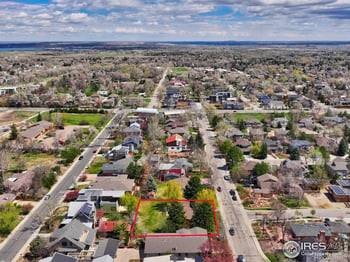
The Front Range looks like one long metro on a map. In real life, it functions as a series of corridors with very different rhythms. Where you land along those corridors will shape your routines more than the city name on the address.
The I-25 spine carries most north–south traffic and energy. C-470 often defines how south-metro residents move day to day. E-470 is commonly used for airport access and bypassing congestion. I-225 matters if healthcare, work, or family routines pull you east.
The strategy is simple: choose the corridor that matches how you live first, then narrow neighborhoods within it. That prevents buying a great home in the wrong place.
A sunny Saturday can make almost anywhere feel perfect. The truth shows up on Tuesday—when errands pile up, traffic patterns emerge, and the wind kicks up. Think of this as two “Tuesday tests”: one weekday morning and one weekday afternoon, when daily life is most honest.
If you can describe your preferred corridor, weekday routine, and tolerance for weather friction without hesitating, you’re likely closer to being “ready” than most people who start browsing.
If you’re visiting, drive your likely routes during those times. If you’re already here, pay attention to how long errands actually take on normal days. Locals rely on tools like COtrip to check real-time road conditions when weather or construction hits.
Renting first isn’t a fallback—it can be a deliberate way to avoid locking into the wrong corridor or lifestyle too quickly. If your timing allows and you’re still uncertain about routines or seasonal patterns, a short lease can provide clarity without pressure.
If you’re confident in your priorities and location fit, buying first can make sense. The key is honesty about how much you still need to learn.
Colorado homes often look charming while hiding daily friction. Layout matters more than style labels. Decide early whether you’re prioritizing one-level living, main-floor bedrooms, or minimizing vertical movement altogether.
Many buyers find clarity by working through layout logic first, then browsing homes that meet those criteria. Filtering by function—not just square footage or aesthetics—leads to fewer regrets. If you want to pressure-test your preferences, it helps to revisit how people actually choose the right home style in Colorado.
If “low-maintenance” is part of the plan, make sure you’re defining it correctly. Living here, it’s not just about mowing the lawn—it’s about weather, roofs, and who handles what: what “low-maintenance living” really means in Colorado.
Living along the Colorado Front Range isn’t perpetually snowy, but weather does shape routines. Wind, temperature swings, and winter driving affect how easy daily life feels.
The National Weather Service offers practical, non-alarmist guidance at weather preparedness and travel safety.
Strategic movers don’t separate the house from the responsibilities that come with it. Exterior maintenance, heating systems, roofing history, and HOA coverage all shape long-term ease. This is also where “patio home” and “condo” can diverge in real life—if you’re comparing those routes, this breakdown can help: ranch vs patio vs condo-style living.
A good inspection isn’t a formality. In the Front Range, buyers often focus on a few specific items because they influence comfort over time.
Colorado’s Department of Public Health offers clear guidance on radon testing.
Most people don’t move based on hospitals—but access to care often becomes more important sooner than expected. Because the Front Range stretches north to south, healthcare access often depends more on corridor choice than straight-line distance. The goal isn’t to overthink it—it’s to avoid choosing a home that turns a simple appointment into a production.
Most long-term regrets here aren’t dramatic. They sound like: “We didn’t realize how often we’d be driving,” or “We loved the house, but not the routine.” Slowing down before committing is often what prevents those quiet frustrations.
Once you’ve worked through these steps, browsing homes becomes less about discovery and more about confirmation.
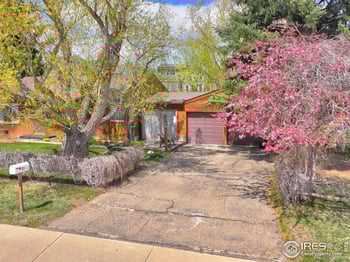
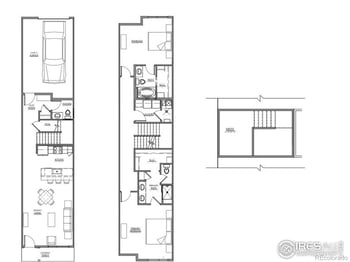
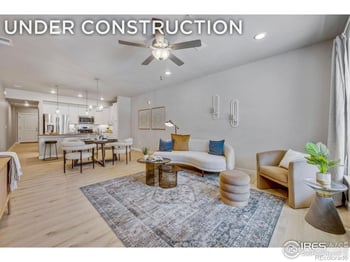
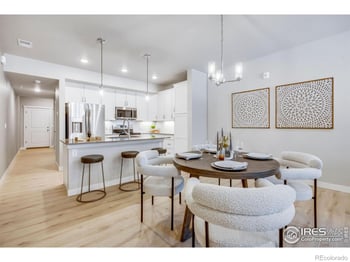
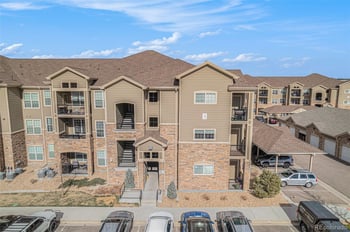
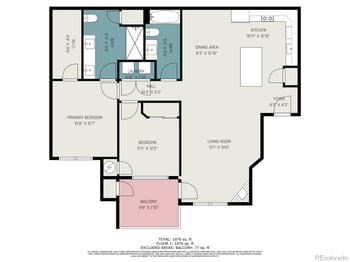
Below are current Front Range homes that support one-level living, whether through true single-story layouts or designs that function primarily on the main floor. Use this as a reference point to confirm fit—not to rush a decision.

It can be, especially if you value access to services, healthcare networks, and a range of home styles from lock-and-leave options to quiet single-level neighborhoods. The best long-term fit usually comes down to two decisions: choosing the corridor that matches your routine (work, family, appointments, airport access) and choosing a layout that stays comfortable as your needs evolve.
Renting first can be a smart strategy if you’re still learning which corridor fits your daily life or how weather and traffic affect your routines. A short lease gives you real weekday experience—errands, drive times, and neighborhood rhythm—without locking in too quickly. If you already know your corridor, layout priorities, and non-negotiables, buying first can also be a clean path.
Starting the home search before they’ve defined what “easy” means for their routine. That usually shows up as choosing a great-looking home with the wrong driving patterns, the wrong layout, or more maintenance than expected. The safest sequence is routine first, corridor second, layout third—then listings.
Focus on weekday testing, not weekend impressions. If you can, run two “Tuesday tests”—one weekday morning and one weekday afternoon—on the routes you’ll use most (appointments, errands, airport runs, family visits). If you’re planning remotely, build your shortlist around a corridor first, then confirm drive-time patterns once you’re on the ground.
They can, mostly as a long-term desirability signal rather than a daily-life factor. Even if schools aren’t part of your routine, district reputation often influences resale demand and neighborhood stability. You don’t need to obsess over rankings—just treat schools as one of several “future-proofing” variables alongside layout, maintenance, and corridor fit.
It doesn’t always mean a true single-story home. In practice, one-level living means your daily needs work on the main floor—primary bedroom, main living spaces, laundry access, and an easy entry—so stairs aren’t part of your routine. Some homes are single-story, and others are two-story designs that function primarily on the main level. The goal is comfort and long-term ease, not a label.
Your Real Estate Expert. Regarding real estate in the Denver Metro market, you deserve an expert who places your needs above all else. I'm Brian Burke, a licensed REALTOR® and seasoned real estate broker and owner of Kenna Real Estate with over two decades of experience. I've helped hundreds of home buyers and sellers navigate every transaction, and my comprehensive industry knowledge spans from appraisal to mortgage to real estate expertise.
My dedication to excellence has earned me recognition as a pricing specialist. This allows me to find the best solutions for even the most unconventional transactions to benefit my clients. Consider me your trusted Real Estate advisor for your next transaction, whether it's for yourself, a loved one, or a friend. Always choose an agent who aligns with your needs, even if that means exploring other options.
You may not be aware that I've held a REALTOR® license since 2002, dedicating my time to becoming an authority in all aspects of Residential Real Estate and Construction. In addition, I established my own Real Estate brokerage firm, providing comprehensive 360-degree Real Estate services, from the initial acquisition of a client's first Real Estate asset to the disposition of their entire Real Estate portfolio.
My commitment is unwavering in delivering top-notch service that consistently exceeds my clients' expectations, whether you're selling or buying. Even after the transaction is complete, I remain your lifelong REALTOR®, ready to assist you at any time. When you, your family, or friends choose me as your Real Estate agent, I promise to be the best agent you've ever worked with in the Real Estate industry.
Proudly serving Arapahoe, Douglas, El Paso, Denver, Jefferson, Weld, Lairmer, Elbert, Broomfield, Boulder, and Adams Counties! I have a team of anents in most Colorado cities from Fort Collins, to Grand Junction, to Denver, and Colorado Springs.
This is what You Get when I sell your house:
When it comes to your real estate, trust in a dedicated professional who puts your goals first. Contact me, Brian Lee Burke, today, and let's turn your real estate dreams into reality.


