New - 30 Mins Ago


$1,049,000
Active
4
Beds
3
Baths
2632
Sqft
0.17
Acres
2745 Prairie Ridge Ct, Lafayette, CO 80026
MLS#: RECIR1058192
.jpg)


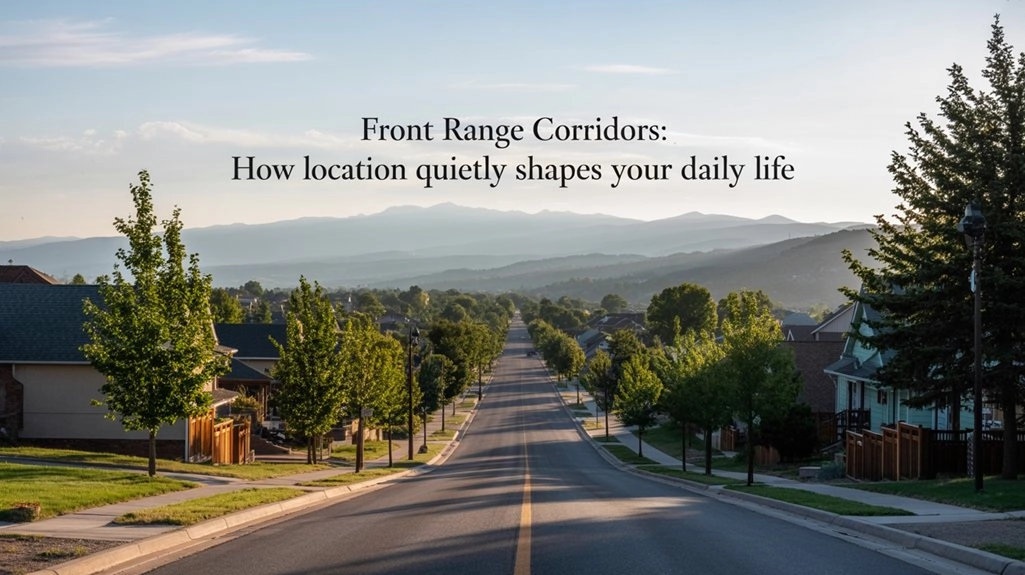
Most people relocating to Colorado start by making a shortlist of city names. That’s natural. But after you’ve lived along the Front Range for a bit, you notice something: daily life is shaped less by the name on your mailing address and more by where you sit in the metro—how you move on I-25, which routes you rely on (US-36, C-470, I-70), where your errands naturally happen, how the wind hits your neighborhood, and what a normal Tuesday drive actually feels like.
What this guide helps you avoid: buying a home you genuinely like, then realizing the location quietly works against your routine—errands feel farther, driving feels heavier, or weather exposure makes simple tasks feel like work.
If you want the broader context first, start with Relocating to the Colorado Front Range: A Realistic Guide to Living Here. If you’re still refining what kind of home actually fits your life, these two guides pair naturally with the location-first approach: How People Actually Choose the Right Home Style in Colorado and What “Low-Maintenance Living” Really Means in Colorado.
Relocation gets easier when you choose your daily-driving reality first—then shop for homes inside that lane.
A single city can contain several completely different day-to-day experiences. But the “side of town” you choose tends to deliver a more consistent reality—similar commute patterns, similar exposure to wind and sun, similar access to medical offices, groceries, and the places you’ll actually use. When someone says, “It looked close on a map,” they’re usually learning this distinction too late.
Drive it like a resident: do one normal weekday morning drive and one late-afternoon drive. Then run a real errand—grocery store, pharmacy, or a stop you’ll actually make once you live here.
You’re not trying to be impressed. You’re checking whether the driving, timing, and convenience feel easy or draining on a regular day.
This approach doesn’t replace neighborhoods. It simply helps you choose the right daily-life zone first, so the neighborhoods you explore are already aligned with how you want your days to work.
Along the western edge of the metro—closer to the foothills—the environment tends to make itself known. Weather can shift quickly. Wind can be more persistent. Winter sun and shade matter more than many newcomers expect. A home’s orientation can quietly decide whether your driveway dries by midday or stays slick longer than you’d like.
This location type appeals to homebuyers who want scenery, trail access, and a daily sense that Colorado feels present. The trade-off is that the climate plays a more active role in your routine. You become more aware of exposure, drainage, and how your property handles snow and freeze–thaw cycles.
Low-maintenance reminder: a newer home can still feel “high effort” if your lot stays shaded or your entry holds snow longer than you expected.
If winter comfort and sun exposure are top of mind, the companion guide Sun, Snow, and Strategy: Choosing a Home That Works With Colorado’s Climate dives deeper into those details without turning into a forecast.
In mature suburban areas—where schools, services, and road patterns have had time to settle—daily life tends to run smoother. Errands cluster naturally. Medical offices, grocery stores, and parks are usually within a predictable radius. You can build a routine without constantly checking traffic apps.
This location type often fits homebuyers who prioritize calm, stability, and consistency. Streets are quieter. Infrastructure feels complete. Many homes and communities are designed around long-term livability rather than novelty.
When people say they want “easy living,” they often mean: errands are close, medical care is straightforward to reach, and the drive rarely surprises them.
Fast-growth areas attract attention because of newer homes, modern layouts, and newer infrastructure. Floorplans often match current preferences, and homes may require less immediate repair work.
What’s easy to miss is the day-to-day logistics. In fast-growth areas, convenience can lag behind construction. Services take time to catch up. A simple errand can turn into a longer drive, and traffic patterns can change quickly as development accelerates. Newer doesn’t always mean simpler—it often just means different trade-offs.
Quick check: are you choosing “newer” for the house, or “easier” for the week? Sometimes those split in growth areas.
This is where definitions of “low maintenance” can blur. The house itself may be newer, but your routine may be heavier if everything requires a drive. Revisiting what low-maintenance living actually means in Colorado helps clarify that distinction.
Some Front Range areas are shaped around access—major routes, employment centers, and predictable travel windows. For homebuyers who still work, travel often, or simply value their time, these areas can make weekdays feel lighter.
Locals often recommend repeating the Tuesday Test here. Not a weekend drive. Not a holiday. A normal weekday morning and late afternoon. That’s when you learn whether a route feels steady or whether it quietly dictates your schedule.
E-470 and the Northwest Parkway come up in real conversations because some homeowners are willing to trade money for fewer surprises. It’s not about “saving time” every day—it’s about knowing what the drive usually looks like so you can plan around it.
For real-time conditions during storms or winter weather, many residents rely on COtrip to see how roads are actually behaving.
Once one location type feels right, the others often start to feel obviously wrong. That clarity usually makes the rest of the process easier. These four questions tend to reveal direction quickly:
This isn’t about being picky. It’s about choosing a location that continues to support you as life changes, rather than quietly becoming a source of friction.
Feeling comfortable where you live matters, and many homebuyers also consider school quality—whether for their own household or as a signal of long-term stability. Choosing the right daily-life zone helps by steering you toward areas that match your preference for access, exposure, and driving reality. From there, individual neighborhoods are easier to evaluate with realistic expectations.
Long-term confidence is usually built on simple fundamentals: manageable upkeep, access to services you’ll actually use, and a location that still feels comfortable once the novelty fades.
Once you know which location type fits your routine, home shopping becomes more focused. You’re no longer bouncing between day-to-day realities that don’t match—you’re comparing homes inside a lane that already feels right.
Use the listing grid below as a way to see how your preferred daily-life zone shows up in real homes—not to rush a decision, but to confirm you’re searching in the right place.
Before you scroll: if you’re torn between two areas, compare driveway/lot exposure, your real errands, and how often you’ll need I-25, US-36, C-470, or I-70 to live your life.




A corridor is a band of connected areas that share the same daily-life patterns—commute routes, errands loops, weather exposure, and access to services. City names can hide those differences. Thinking in corridors helps you choose a lifestyle lane first, then narrow to neighborhoods and homes that match it.
Do a resident-style trial. Drive the main route on a normal weekday morning and late afternoon, then run a simple errand loop (grocery, coffee, pharmacy, park). Pay attention to how it feels: does it feel easy and efficient, or like everything takes extra time? That rhythm usually matters more than the address on paper.
Not always, but it can be more variable. Weather changes can arrive faster, wind exposure is often more noticeable, and sun/shade patterns can affect how quickly snow and ice clear. The key is to evaluate the property’s exposure and orientation—especially driveway and entry paths—so winter upkeep feels predictable rather than surprising.
Start with what you can feel and verify: infrastructure maturity, community upkeep, lighting, sidewalks, and how the area functions at different times of day. Corridors with stable services and predictable routines often correlate with the kind of neighborhood stability many buyers want. From there, compare specific neighborhoods and schools based on your priorities instead of relying on one-size-fits-all lists.
In an evergreen sense, yes. Corridors that support consistent daily life—reasonable access to services, manageable upkeep realities, and a routine you won’t resent—tend to hold buyer demand over time. It’s less about predicting the market and more about choosing a location that stays desirable because it works well for real life.

Your Real Estate Expert. Regarding real estate in the Denver Metro market, you deserve an expert who places your needs above all else. I'm Brian Burke, a licensed REALTOR® and seasoned real estate broker and owner of Kenna Real Estate with over two decades of experience. I've helped hundreds of home buyers and sellers navigate every transaction, and my comprehensive industry knowledge spans from appraisal to mortgage to real estate expertise.
My dedication to excellence has earned me recognition as a pricing specialist. This allows me to find the best solutions for even the most unconventional transactions to benefit my clients. Consider me your trusted Real Estate advisor for your next transaction, whether it's for yourself, a loved one, or a friend. Always choose an agent who aligns with your needs, even if that means exploring other options.
You may not be aware that I've held a REALTOR® license since 2002, dedicating my time to becoming an authority in all aspects of Residential Real Estate and Construction. In addition, I established my own Real Estate brokerage firm, providing comprehensive 360-degree Real Estate services, from the initial acquisition of a client's first Real Estate asset to the disposition of their entire Real Estate portfolio.
My commitment is unwavering in delivering top-notch service that consistently exceeds my clients' expectations, whether you're selling or buying. Even after the transaction is complete, I remain your lifelong REALTOR®, ready to assist you at any time. When you, your family, or friends choose me as your Real Estate agent, I promise to be the best agent you've ever worked with in the Real Estate industry.
Proudly serving Arapahoe, Douglas, El Paso, Denver, Jefferson, Weld, Lairmer, Elbert, Broomfield, Boulder, and Adams Counties! I have a team of anents in most Colorado cities from Fort Collins, to Grand Junction, to Denver, and Colorado Springs.
This is what You Get when I sell your house:
When it comes to your real estate, trust in a dedicated professional who puts your goals first. Contact me, Brian Lee Burke, today, and let's turn your real estate dreams into reality.


