New - 30 Mins Ago

.jpg)



TL;DR
California buyers moving to Denver who prioritize main-floor living consistently underestimate two things: how much HOA enforcement and snow management vary by suburb, and how far-out locations like Parker or Castle Rock compound those problems when every errand becomes a long drive in bad weather. The suburb that looks right on paper — ranch-style, flat lot, no stairs — often reveals its real trade-offs in the first February storm, and the documents that expose those trade-offs (HOA resale disclosure, plat, seller property disclosure) are the ones most out-of-state buyers skip before making an offer.
Most articles tell you Denver is less expensive than California and leave it there. This one starts where those articles stop: the morning after your first blizzard, standing in a driveway you didn't know you'd have to clear by 8am or face an HOA fine from an association you've never dealt with anything like before.
The broad Denver-versus-California comparisons you find online skip the suburb-by-suburb reality that actually determines whether your daily life works. Snow upkeep, lot type, HOA enforcement culture, and main-floor availability vary dramatically across the metro. The I-25 corridor running north-south, the C-470 loop anchoring the southwest suburbs, and the E-470 toll road framing the southeast — these are not interchangeable. Each corridor carries a different home-age cohort, a different HOA density, and a different relationship with winter.
California transplants consistently report that the lifestyle gap shows up not in cost-of-living charts but in the first hard snowfall. Who clears the walk, when, and what happens if they don't — these are the questions the brochure doesn't answer. Main floor everything sounds simple until you're managing a slab-on-grade home in a foothills-adjacent suburb where the HOA has a fine schedule and the lot shape sends ice straight toward the front entry.
How this article is organized
The suburb-by-suburb comparison runs along three corridors: southwest metro (Littleton and Highlands Ranch via C-470), northwest metro (Arvada and Wheat Ridge via I-70/I-76), and southeast metro (Centennial, Lone Tree, Parker, and Castle Rock via I-25 and E-470). Each corridor is evaluated on the same four variables: home-age cohort, HOA structure, snow management burden, and daily convenience reality. If you're also thinking through how California equity translates into a Denver purchase position before diving into the suburb comparisons, how California sale proceeds position you across these specific suburbs is worth reading first.
This article focuses on what most brochures skip: which suburbs actually deliver main-floor living without punishing trade-offs, and which ones look great on paper but create friction the moment winter arrives. That's not the brochure life — but it's the one you'll actually be living.
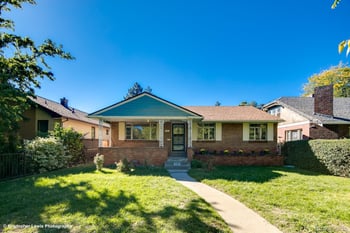
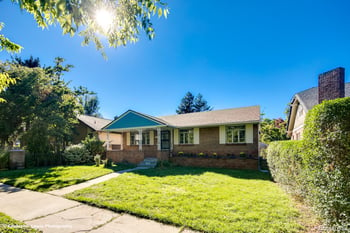
Two ranch homes on the same Denver suburb street can look identical from the curb — one will cost you nothing extra in winter, the other will have you out there at dawn post-blizzard or facing an HOA fine for missing a clearing deadline you didn't know existed.
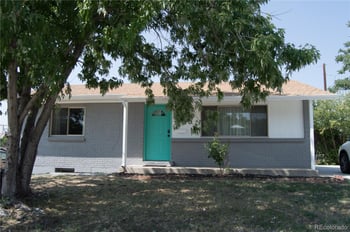
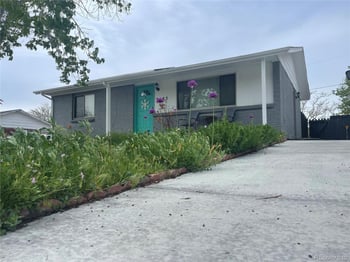
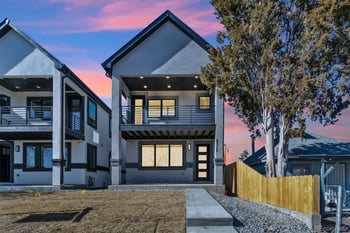
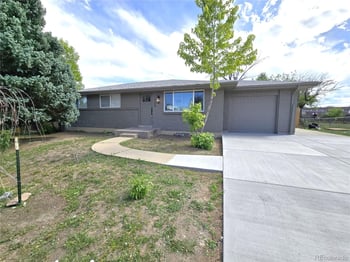
Denver metro main-floor living splits into two distinct cohorts. Mid-century ranches — built roughly between the 1950s and 1970s — typically sit on larger lots, often with basements, and carry the insulation standards and mechanical systems of their era. Newer no-step builds, most of them post-2000, tend to be slab-on-grade or walkout construction on tighter lots with modern HVAC and better thermal performance. Both deliver no-stairs living. They are not the same product.
Older ranch and slab homes offer the main-floor living California buyers want, but they frequently bring insulation gaps, higher heating costs, and snowmelt drainage problems at slab edges that surprise buyers used to mild winters. A pre-1970s ranch in Englewood or Wheat Ridge might check every box on the MLS listing and then reveal, after the first cold snap, that the slab perimeter drains poorly and the heating bill runs significantly higher than anything in the buyer's California experience.
MLS search filters for "ranch," "single-story," or "no-stairs" will surface both cohorts in the same results. Buyers must distinguish them by build year and foundation type — slab-on-grade versus walkout basement — before comparing on price. A mid-century ranch in Arvada and a post-2005 no-step build in Centennial are different maintenance commitments, not just different price points. For a direct comparison of what those structural differences mean for long-term upkeep, the maintenance reality gap between mid-century ranches and new builds lays it out clearly before you commit to a home-age cohort.
HOA structure is the single most consequential document to read before closing, and most California buyers don't read it carefully enough. Some HOAs in Highlands Ranch and Centennial mandate snow removal contracts and fine owners who miss clearing deadlines — deadlines that can be as early as a set number of hours after snowfall ends. Others offer no snow service at all, leaving owners to manage their own walks, driveways, and sidewalk sections.
Here's the part that catches buyers off guard: the HOA that looks like a convenience — snow removal included — sometimes comes with architectural controls that restrict driveway materials, flat roof additions, or ramp installations. Those are exactly the modifications aging-in-place buyers need. HOA snow-removal rules and fines that force early-morning clearing routines unfamiliar to California movers are one friction point; discovering that the same HOA blocks the accessibility modifications you planned is another.
HOA document check: what to request and what to look for
Request these during resale disclosure review — before making an offer:
Do not rely on the listing agent's summary of HOA rules. Pull the full resale disclosure package and read the snow and architectural sections yourself.
Once you understand which home type fits your needs, the suburb-by-suburb comparison becomes a question of snowbelt exposure and daily convenience — which the next sections map corridor by corridor. For a deeper look at which structural features actually support aging-in-place versus which ranch homes create new accessibility problems, the ranch vs. two-story trade-off on the Front Range is worth reading alongside the HOA documents.
Littleton's historic downtown and Highlands Ranch's manicured streets look like the low-maintenance Colorado life California buyers imagine — until the first February storm drops eight inches overnight and the HOA clock starts running.
Littleton's older ranch stock — pre-1980s builds common near Littleton Boulevard and the historic downtown core — delivers the main-floor living California buyers want. The walkability around the downtown cluster is real: boutiques, restaurants, and daily errands within a short walk from the right address. The C-470 corridor anchors commute access, with lighter southbound mornings and more variable northbound peaks toward the Denver Tech Center.
What the listing won't tell you: most of this older inventory sits outside HOA jurisdiction or in associations that offer no snow service. That means owners manage their own walks and driveways after every snowfall. For a California transplant who has never owned a home where snow isn't cleared from the driveway by 8am, this is an operational shift that doesn't register until the first storm. And lot shapes in Littleton's older neighborhoods vary — corner lots and smaller slab-on-grade parcels create snow and ice buildup at entries and patios that is especially problematic for aging-in-place buyers. Verify lot shape and slope on the plat before closing, not after.
The drive to the Rocky Mountain foothills via US-285 is a genuine lifestyle draw. It also means foothills-adjacent neighborhoods in Littleton carry higher snowfall accumulation than the plains-side suburbs to the east. Check historical snowfall patterns by zip code, not city-level averages — the difference within Littleton alone can be meaningful.
Highlands Ranch HOAs are among the most structured in the metro. Snow removal rules, fine schedules, and architectural controls exist at a level of detail that surprises California transplants who have navigated HOAs before but not at this enforcement intensity. A California transplant who buys a ranch-style home in Highlands Ranch for main-floor living and assumes the HOA is a background administrative function often discovers, after the first significant snowfall, that there are deadlines, fines, and constant driveway clearing expectations that feel like a part-time job.
The sub-association HOA in Highlands Ranch is not the same document as the master HOA — and this is where buyers consistently get caught. Buyers who only read the master HOA miss the fine schedule that applies to their specific street. The sub-association governs snow clearing timelines, driveway material restrictions, and architectural modifications. Request both documents during resale disclosure and read the snow and architectural sections specifically.
The trade-off here is direct: no-stairs living and aging-in-place convenience on one side; snow upkeep, HOA enforcement, and winter maintenance stress on the other. Highlands Ranch delivers real infrastructure — maintained common areas, structured services — but it comes with accountability requirements that have no California equivalent for most buyers. If the southwest metro's HOA structure feels too restrictive, the northwest corridor offers a different arrangement — older ranches with more freedom, but less infrastructure and a different set of problems, which the next section examines.
No HOA sounds like the dream after years of California association rules — until the city plow buries your driveway apron at 3am and your neighbor hasn't touched their walk in four days.
Arvada offers some of the largest mid-century ranch lots in the metro. The 1950s–1970s builds on generous parcels appeal to California buyers who want space and a main-floor master without the density of newer developments. Olde Town Arvada functions as the daily convenience anchor for the northwest corridor — a walkable node with a recognizable cluster of shops and restaurants. Verify current business mix and walkability access from a specific address rather than assuming proximity based on city-level descriptions; what's walkable from one Arvada address may require a drive from another.
The foothills exposure is the variable most buyers underestimate. West-facing lots toward the foothills along Ward Road carry higher snow accumulation than east-facing Wheat Ridge lots. Arvada's position relative to the I-70 corridor means foothills weather patterns reach it more directly than the plains-side suburbs. Check address-specific snowfall patterns and lot orientation before assuming the northwest metro is milder than the southwest.
The I-70 and I-76 corridors provide direct downtown Denver access, but peak-hour congestion variability is real. Test-drive the commute in both directions before committing, and verify current road conditions and construction impacts with CDOT — the corridor shifts seasonally and by construction phase.
Many northwest metro ranches sit outside HOA jurisdiction entirely. That freedom from fine schedules and architectural controls is real — but no-HOA freedom turning into street-plowing and neighbor-conflict problems when snow piles up is equally real. Street plowing is a municipal function with variable response times, and in a no-HOA zone, the responsibility for walks, driveways, and sidewalk sections lands entirely on the owner.
The same lot size that makes Arvada and Wheat Ridge ranches appealing means more linear feet of sidewalk to clear. A generous parcel that felt like a lifestyle upgrade in the listing becomes a significant physical obligation after every snowfall — and in a no-HOA zone, there's no shared contract to fall back on and no association to mediate when a neighbor's uncleared walk creates a hazard at the shared property line.
HOA vs. no-HOA ranch ownership: what changes in winter
Confirm HOA status via county records before closing — absence of an HOA is not always obvious from the listing, and some northwest metro properties sit within metro districts that carry separate fee obligations even without a traditional HOA. Daily convenience in the northwest metro depends heavily on which corridor you're on, and for buyers who need groceries, pharmacies, and urgent care within a short drive in bad weather, the farther-out suburbs create a different kind of friction — which the next section addresses directly. For out-of-state buyers specifically weighing whether the no-HOA northwest metro fits their winter tolerance, how California and Texas buyers specifically underestimate Denver winter logistics is worth reading before deciding.
The southeast metro's newer ranch inventory looks like the answer to every California buyer's main-floor living wish list — until the first February storm and a pharmacy run that takes 45 minutes each way.
Centennial and Lone Tree carry the highest concentration of post-2000 no-step builds in the metro. Slab-on-grade construction with modern insulation and mechanical systems makes these the most aging-in-place ready options available — and the tighter HOA controls in these communities typically include snow removal contracts that cover driveways and walks. For a couple choosing a single-story home for aging parents, this is the corridor where the infrastructure most closely matches the intention.
The corner lot problem is real here, though. Corner lots in Centennial are common enough that it's worth checking on every specific property: the HOA snow contract that covers your driveway may explicitly exclude the corner sidewalk section. That section becomes the owner's responsibility, and for aging-in-place buyers, it's exactly the clearing burden the HOA was supposed to eliminate. Verify lot shape on the plat and confirm whether the HOA snow contract covers corner sidewalk sections before making an offer — not after.
The E-470 toll corridor and I-25 spine anchor southeast metro commutes. DTC access from Centennial is manageable under normal conditions. Verify current E-470 toll rates and commute variability with CDOT before committing — the corridor's performance shifts by season and construction phase, and the clear-day drive time is not the number that matters most. For buyers considering Centennial or Lone Tree for aging parents specifically, how southeast metro aging-in-place options map to specific care proximity needs adds a layer this section can't cover fully.
Parker and Castle Rock deliver space, quiet, and newer ranch inventory. The flat lots and ranch-style layouts are genuinely appealing, and the distance from urban density is a feature for buyers who want it. But the specific downside is equally specific: daily convenience sucks for buyers who underestimate errand distance. Groceries, pharmacies, urgent care — these require longer drives that get materially worse in snow. A clear-day errand run that feels acceptable in October becomes a different calculation in January.
Castle Rock sits at a higher elevation than the plains-side suburbs, which means more snowfall accumulation and longer road recovery times after storms. The distance compounds the elevation: a buyer in Parker or Castle Rock who likes the flat lot and no-HOA setup on a specific property may not fully register, until winter arrives, that the combination of unplowed streets, distance to everyday errands, and 4WD requirements on certain roads makes the location less practical than it appeared in warmer months.
Metro district fees in Castle Rock and Parker are also worth flagging. In these communities, the HOA headline fee visible in the listing is often not the total monthly obligation — metro district fees stack on top and can push the all-in monthly cost meaningfully higher than buyers calculated from the listing alone. Pull the full resale disclosure and the metro district documentation before modeling your monthly costs. Verify address-specific snowfall patterns and municipal plowing priority routes for any Castle Rock or Parker neighborhood before choosing a specific street.
Errand-distance reality check for southeast metro buyers
Before committing to a Parker or Castle Rock address, drive these routes from the specific property — then add 15–20 minutes for snow conditions:
If the snow-adjusted total for any of these is not acceptable for your household's needs, the suburb is telling you something the listing price isn't.
Once you've mapped daily convenience and snow exposure by suburb, the remaining question is whether your California equity and salary actually position you well across these specific home types — which the next section addresses honestly.
California buyers often arrive in Denver feeling financially ahead — and in many ways they are — but the specific home type they need tends to sit at the price point that shrinks that advantage fastest.
California equity frequently gives transplants a meaningful down payment advantage in the Denver metro. The purchasing power gap varies significantly by suburb, though. The same equity that reaches a newer no-step build in Centennial may only stretch to a mid-century ranch in Arvada or a smaller lot in Littleton. These are not equivalent products — they carry different maintenance obligations, different HOA structures, and different snow management burdens. Verify current price ranges by suburb and home type with a local agent and current MLS data rather than relying on statewide averages, which flatten the corridor-by-corridor variation that actually matters for this decision.
California transplants consistently underestimate ongoing costs that have no California equivalent: HOA snow contracts, higher heating bills in older ranch homes, insulation or mechanical upgrades in mid-century builds, and — in Castle Rock, Parker, and BackCountry Highlands Ranch specifically — metro district fees that stack on top of the HOA headline figure. These are budget line items to model before closing, not after. Pull the resale disclosure and metro district documentation for any property in those communities and calculate the all-in monthly obligation, not just the purchase price.
One cost category that surprises nearly every out-of-state buyer regardless of suburb: hail season. May through September in the Denver metro brings hail events that create a genuine insurance and roof replacement cost burden for any detached single-family ranch home. This is routinely unknown to California buyers and worth factoring into the total cost of ownership conversation before making an offer on any ranch-style home with an older roof.
The political culture question comes up frequently from California transplants, and it's worth being direct: Denver's political landscape does not map neatly onto suburb boundaries. The city of Denver leans reliably progressive. Littleton and Arvada sit in more moderate territory. Castle Rock and Parker lean more conservative. Greenwood Village and Lone Tree occupy their own positions. Buyers who care about local political culture should verify current local election results and municipal policy priorities rather than assuming the metro is uniform — the gradient is real and the suburbs in this article span a meaningful range.
Total cost of ownership: what to model before closing
For many California transplants, the math resolves to: worth it for no stairs — but only if the total cost of ownership across HOA, maintenance, heating, and snow management was modeled honestly before the offer was written. With the budget and political context mapped, the final question is how to structure the actual search — which documents to pull, which corridors to test-drive, and which trade-offs to rank before making an offer.
The suburb comparison narrows the list — but the offer decision turns on three documents and one test-drive that most California buyers skip because they don't know to ask for them.
Before making an offer on any main-floor home in the Denver metro, pull three documents. First, the HOA resale disclosure — look specifically for snow removal contract language, fine schedules, and architectural controls on driveway materials, ramp installations, and flat roof modifications. In a Highlands Ranch sub-association, this document can run dozens of pages; the snow removal and fine language is rarely on the first page, and buyers who skim it miss the clause that matters most.
Second, the plat. Verify lot shape, corner exposure, and slope. Snow slides right onto the walkways on certain lot configurations — corner lots and sloped entries are the most common culprits, and lot shape and slope creating snow and ice buildup on walkways, entries, and patios is especially problematic for aging-in-place buyers who chose the home specifically to avoid physical burden. The plat is a public document; your agent can pull it before you write an offer.
Third, the seller's property disclosure. Look for prior drainage issues, insulation problems, or snowmelt issues at slab edges. A pre-1980 ranch in Englewood or Wheat Ridge that has had recurring basement window well flooding or slab-edge drainage problems will show it here — or should. If the disclosure is thin on these items, ask directly and get the answer in writing.
Three-document pull: before every offer on a main-floor Denver home
Use MLS filters for "ranch," "single-story," or "no-stairs" as the starting point, then filter by build year to separate mid-century ranches from newer no-step builds. These are different products with different trade-off profiles and should not be compared on price alone.
Test-drive the commute from each candidate suburb in both directions during peak hours. Then make at least one trip during or immediately after a snowfall. The difference between a clear-day and a snow-day commute on C-470, I-25, or E-470 is the variable most California buyers never test before closing — and it's the one that most directly determines whether the suburb works for their daily life. Needing 4WD to navigate your own street after a storm is a real consideration in certain northwest and southeast metro neighborhoods; verify road conditions and plowing priority routes for the specific address, not just the city.
Verify daily convenience from the specific address: drive to the nearest grocery, pharmacy, and urgent care and time it. Then add 15–20 minutes for snow conditions and decide whether that total is acceptable for your household. This is the test that separates the suburbs that work from the ones that looked right on paper.
The suburb-by-suburb trade-off is not a ranking — it is a fit question. Buyers who prioritize walkability and HOA snow service fit the southwest metro (Littleton, Highlands Ranch). Buyers who prioritize lot size and no-HOA freedom fit the northwest (Arvada, Wheat Ridge), with the understanding that older ranch and slab home maintenance and self-managed snow clearing come with the territory. Buyers who prioritize newer no-step builds fit the southeast (Centennial, Lone Tree), with the understanding that distance and elevation costs are real in Parker and Castle Rock. For a structured pre-offer framework that extends this document and test-drive approach, a relocation checklist built specifically for Front Range suburb decisions covers the verification steps in sequence. And if you haven't yet spent a winter week in the specific suburb you're considering, what a full Denver winter actually looks like for daily routines in south Denver is the most useful thing you can read before finalizing which suburb's snow trade-offs you can actually live with.
The buyers who land well in Denver are the ones who treated the search like a decision framework — documents first, test-drive second, offer third. The suburb that's worth it for no stairs is the one where you ran the numbers, drove the commute in February, and read the HOA fine schedule before falling in love with the kitchen.
Your Real Estate Expert. Regarding real estate in the Denver Metro market, you deserve an expert who places your needs above all else. I'm Brian Burke, a licensed REALTOR® and seasoned real estate broker and owner of Kenna Real Estate with over two decades of experience. I've helped hundreds of home buyers and sellers navigate every transaction, and my comprehensive industry knowledge spans from appraisal to mortgage to real estate expertise.
My dedication to excellence has earned me recognition as a pricing specialist. This allows me to find the best solutions for even the most unconventional transactions to benefit my clients. Consider me your trusted Real Estate advisor for your next transaction, whether it's for yourself, a loved one, or a friend. Always choose an agent who aligns with your needs, even if that means exploring other options.
You may not be aware that I've held a REALTOR® license since 2002, dedicating my time to becoming an authority in all aspects of Residential Real Estate and Construction. In addition, I established my own Real Estate brokerage firm, providing comprehensive 360-degree Real Estate services, from the initial acquisition of a client's first Real Estate asset to the disposition of their entire Real Estate portfolio.
My commitment is unwavering in delivering top-notch service that consistently exceeds my clients' expectations, whether you're selling or buying. Even after the transaction is complete, I remain your lifelong REALTOR®, ready to assist you at any time. When you, your family, or friends choose me as your Real Estate agent, I promise to be the best agent you've ever worked with in the Real Estate industry.
Proudly serving Arapahoe, Douglas, El Paso, Denver, Jefferson, Weld, Lairmer, Elbert, Broomfield, Boulder, and Adams Counties! I have a team of anents in most Colorado cities from Fort Collins, to Grand Junction, to Denver, and Colorado Springs.
This is what You Get when I sell your house:
When it comes to your real estate, trust in a dedicated professional who puts your goals first. Contact me, Brian Lee Burke, today, and let's turn your real estate dreams into reality.