New - 8 Hours Ago
.jpg)


TL;DR
Greenwood Village fits the South Denver right-sizer profile well when three variables align: your primary destination is the Denver Tech Center, the specific housing type you want — patio home, villa-style, or smaller luxury home with HOA exterior coverage — actually exists in your target neighborhood, and the prestige address matters to you as a lifestyle signal. When any of those three variables is off, Centennial or Cherry Hills Village may be the better fit, and the difference is not about price — it is about which city's daily structure matches what you are actually trying to live.
Every search for "living in Greenwood Village Colorado" returns the same paragraph: affluent, quiet suburb with good schools, close to the DTC. It is accurate as far as it goes. What it does not tell a right-sizer is whether the housing stock they actually want exists there, or whether the commute works from their specific corridor — and those are the two questions that determine whether Greenwood Village is the right move or just a plausible-sounding one.
The gap between Greenwood Village's reputation and its daily reality is widest for buyers who are not raising school-age children and are not commuting to the Denver Tech Center. That is exactly where the wrong decision gets made. A buyer who moves here for the prestige address and the assumed low-maintenance lifestyle can find themselves on a half-acre lot with an HOA that covers almost nothing — and a commute to Downtown Denver that runs straight into I-25 northbound at 7:45 a.m.
This article addresses that gap directly. Greenwood Village fits a specific right-sizer profile well, but only when the commute corridor, the housing stock type, and the lifestyle trade-offs all point the same direction. Those three variables do not always align. The article also builds a framework for comparing Greenwood Village against Centennial and Cherry Hills Village on lifestyle fit — not just price or reputation — so the decision has a real basis before an offer gets written.
If you want to understand what the transition to Greenwood Village actually feels like on day one, what right-sizers notice first after moving to Greenwood Village fills in the lived-experience side of the picture this article sets up.
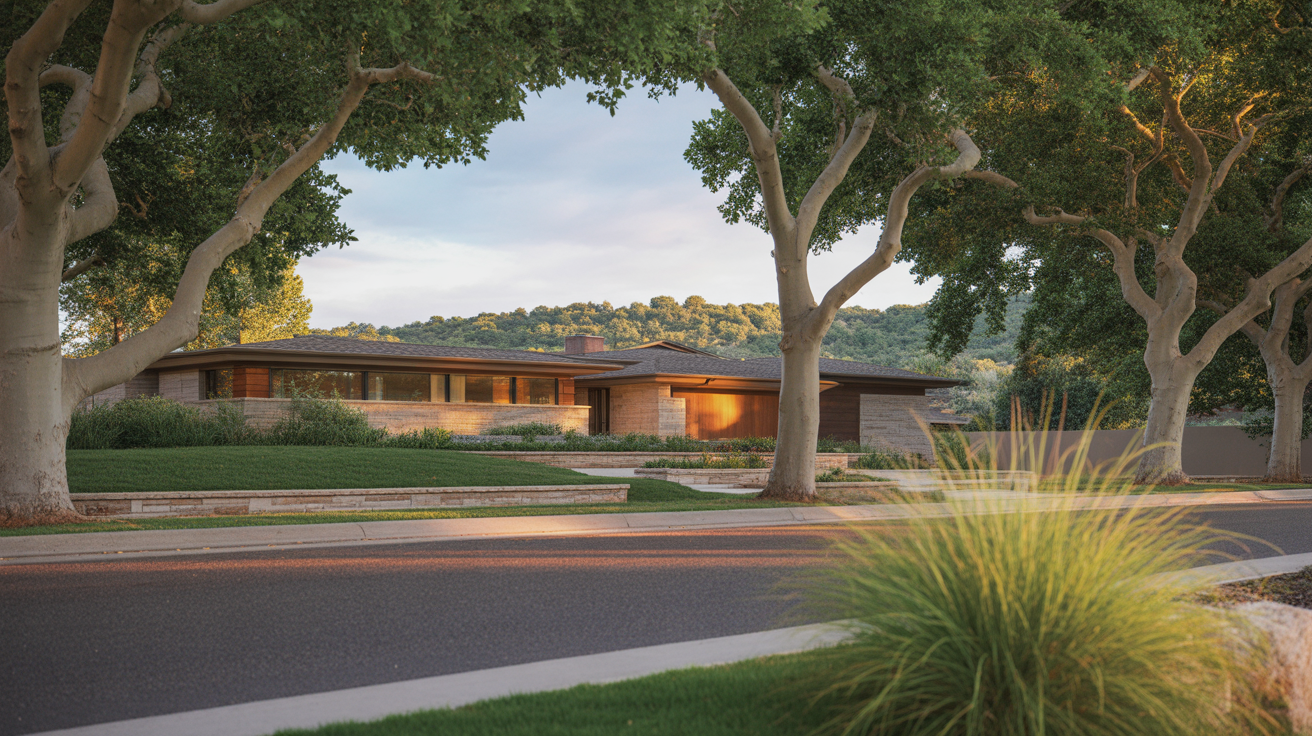
Low-maintenance living and Greenwood Village appear in the same sentence constantly — but the neighborhood's most iconic homes sit on half-acre to one-acre lots that are anything but low-maintenance. The affluent, polished feel is real and visible at the street level: wide lots, mature tree canopy, private drives, and a strong presence of gated communities and HOAs. That polish is not evenly distributed, and it does not automatically translate into the lifestyle a right-sizer is actually after.
The HOA label is where the confusion starts. Some Greenwood Village HOAs cover full exterior maintenance and landscaping — the kind of arrangement where the yard is genuinely someone else's problem. Others collect dues and leave the lot entirely to the owner, functioning more as a set of rules than a service. The listing description rarely clarifies which type you are buying into. That distinction is the difference between true low-maintenance living and paying for an affluent, exclusive location while still managing a large property yourself.
Right-sizing in South Denver often does not produce meaningful monthly savings when HOA fees replace what you were spending on maintenance. That is worth naming directly. A patio home in a full-service HOA community may carry dues that approximate what a larger home cost to maintain — the trade is convenience and predictability, not necessarily a lower monthly number. Pull the HOA resale disclosure document before any offer and read what is specifically covered, not what the listing implies.
There is also a reserve fund question worth raising. Many Greenwood Village and South Denver patio home communities were built in the 1990s and early 2000s, and HOA reserve funds from that era are sometimes underfunded. A special assessment in a community you just moved into is a real financial exposure — particularly for buyers on fixed or semi-fixed income. Ask for the current reserve study, not just the current dues schedule.
The housing stock split right-sizers need to know:
Estate lots (0.5–1+ acres): Maximum prestige address, mature canopy, custom finishes — but yard upkeep is real and HOA coverage often does not include it. These homes contradict the low-maintenance goal.
Patio homes and villa-style properties: The truest low-maintenance option in Greenwood Village — smaller footprint, HOA-managed exteriors in the best cases — but they sit in less prominent corridors and inventory is limited.
Verify HOA coverage specifics via the resale disclosure document. Do not assume from neighborhood reputation.
The housing stock trade-off is real and it is the friction point most buyers hit after they move in rather than before. A buyer who wants a prestige address with a polished, well-cared-for feel but does not want a large yard or heavy upkeep needs to search specifically for patio homes and villa-style properties — not just filter by price or neighborhood name. The most prestigious Greenwood Village addresses often sit on lots that directly contradict the low-maintenance goal.
One more variable worth flagging: the dominant South Denver housing stock from the 1990s build cycle is two-story with the primary bedroom upstairs. If single-level living is a requirement — now or in the near future — that narrows the search considerably. For a closer look at which specific home types in Greenwood Village actually deliver the low-maintenance profile, which Greenwood Village home types actually fit the right-sizer profile goes deeper on the inventory reality. And if main-floor primary bedrooms are a priority, how main-floor primary homes compare across Centennial and Greenwood Village maps the inventory gap directly.
Once the housing stock question is settled, the next variable is whether the commute from Greenwood Village actually works for where this buyer is going every day — and that answer changes significantly by corridor.
Greenwood Village's DTC proximity is real — but DTC access is doing a lot of work in most neighborhood descriptions, and it only tells the full story for buyers whose daily destination is actually the Denver Tech Center. For everyone else, the commute math looks different, and the difference is large enough to matter when choosing a neighborhood.
For buyers whose primary destination is the Denver Tech Center, Greenwood Village's position is a structural advantage. Many DTC employers sit within a few miles of Greenwood Village residential streets, which means the daily commute can be a short surface-street drive rather than a highway run. That is a meaningful quality-of-life difference — particularly for someone who spent years commuting into a denser urban core.
The RTD light rail stations at Orchard and Arapahoe provide a verifiable alternative to driving for DTC-bound commuters. Verify current station access, parking availability, and line schedules directly with RTD before treating light rail as a daily fallback — parking capacity at both stations is finite and fills early on weekday mornings.
A buyer commuting to Downtown Denver from Greenwood Village is on I-25 northbound during peak hours. That is a materially different experience from the short surface-street run to a DTC office — and that difference rarely appears in neighborhood profiles. The I-25 northbound corridor is a known friction point during morning peak, and buyers should test the specific route from the specific address they are considering at their actual departure time, not rely on off-peak estimates.
Commute reality by destination — what to verify before you buy:
Denver Tech Center: Short surface-street drive for most Greenwood Village addresses. Light rail at Orchard or Arapahoe stations is a real option — verify current parking and schedules with RTD directly.
Downtown Denver: I-25 northbound at peak hours. Test this route from the specific address at your actual departure time before committing.
East (Aurora, DIA via Peoria): E-470 access and surface street patterns vary by which Greenwood Village neighborhood you are in. Address-specific route testing is required.
Buyers in the western section of Greenwood Village face a different daily drive than those near Yosemite Street on the eastern edge — the city is not uniform.
Buyers heading east toward Aurora or toward Denver International Airport via Peoria, or west toward Englewood and Littleton, face route realities that depend on which Greenwood Village neighborhood they are in. E-470 access and surface street patterns are not uniform across the city. A buyer near Yosemite Street on the eastern edge has a different daily drive than one in the western section closer to Englewood. The corridor-by-corridor commute reality is not something neighborhood-level descriptions resolve — it requires address-specific testing.
Commute reality is one variable. The other is whether Greenwood Village's lifestyle and housing profile actually beats Centennial or Cherry Hills Village for this specific buyer — and that comparison is more nuanced than price alone suggests.
Right-sizers relocating from denser urban neighborhoods often list safety and quiet as their top two non-negotiables — and Greenwood Village's reputation on both counts is well-established. The reasons behind it are more structural than most descriptions explain, and understanding the structure helps buyers evaluate it honestly rather than taking the reputation on faith.
Greenwood Village is a home rule municipality, which means it maintains its own dedicated police department rather than relying on county sheriff coverage. The strong visibility of the police is a frequently noted resident observation — this is not incidental. It is a direct result of the city's governance structure. That level of local law enforcement presence is a feature of home rule status that Greenwood Village has maintained consistently.
Here is where buyers need to be careful: third-party crime index sites produce wildly different numbers for the same city depending on how they weight and aggregate data. Two sites can show meaningfully different pictures of the same address. The only reliable baseline is the city's own records. Verify current crime data directly with the Greenwood Village Police Department or Arapahoe County public records — not from a ranking site — before drawing conclusions.
The gated communities and HOAs present in many Greenwood Village neighborhoods add a layer of access control that contributes to the community's safety profile. This varies by neighborhood and should be confirmed at the property level, not assumed from the city's general reputation.
The community feel residents describe is consistent: a quiet suburb with good schools, low foot traffic, minimal through-traffic on residential streets, and a retreat-like atmosphere. For right-sizers who want separation from urban density without giving up proximity to the Denver Tech Center and South Denver amenities, that atmosphere is a genuine draw. The exclusive neighborhoods feel intentionally insulated — and for this buyer profile, that is usually the point.
Safety and community feel answer the "is it worth it" question emotionally. The practical comparison against Centennial and Cherry Hills Village requires a more direct side-by-side look at what each city actually delivers for this buyer profile — which is where the real filtering happens.
Most buyers comparing these three cities start with price. For right-sizers, the more consequential comparison is which city's daily structure actually matches the lifestyle they are buying into — and those two things do not always correlate.
Centennial offers a broader range of housing stock, including more low-maintenance options at a lower entry point. The trade is the Greenwood Village prestige address and DTC proximity — Centennial has a slightly more suburban, less polished feel, and the address does not carry the same recognition signal. For right-sizers who prioritize ease over status, that trade may be the right one. For buyers who want the address to mean something — to colleagues, to family, to themselves — it is a real give-up.
HOA fees in Centennial patio home communities tend to run lower than comparable Greenwood Village communities. That is the upside. The downside is that lower fees sometimes reflect less coverage — and the same reserve fund adequacy question applies. Pull the reserve study for any Centennial patio home community the same way you would in Greenwood Village.
Cherry Hills Village's exclusivity is real — but its minimum lot sizes and equestrian zoning in some sections work directly against the low-maintenance goal, and that contradiction rarely surfaces in the listing descriptions that make it look like the obvious prestige choice. A buyer who moves to Cherry Hills Village for the status and discovers they are managing a large lot with no nearby walkable errands has made a category error, not just a preference mismatch.
Cherry Hills Village also requires accepting a commute profile that is less DTC-optimized than Greenwood Village. Every daily errand — groceries, dry cleaning, a quick lunch — involves a car trip. There is no walkable commercial corridor. For buyers who prioritize exclusivity and privacy above convenience, that is an acceptable trade. For right-sizers who want quick access to shopping, dining, and recreation without giving up the quiet suburban environment, it is not.
Three-city comparison for South Denver right-sizers:
Greenwood Village: Prestige address, DTC corridor position, polished well-cared-for feel, gated communities and HOAs present — but low-maintenance stock is limited and requires specific search. Best fit when DTC commute and address recognition both matter.
Centennial: Broader low-maintenance housing stock, lower entry point, lower HOA fees — but less prestige address recognition and a slightly less polished feel. Best fit when ease outweighs status.
Cherry Hills Village: Maximum exclusivity, estate-scale living, significant privacy — but larger minimum lots, equestrian zoning in some sections, total car dependency for daily errands, and a commute profile less suited to DTC. Best fit only for buyers who explicitly prioritize exclusivity over convenience and can accept larger lot obligations.
All three cities sit within the Cherry Creek School District — but school zone boundaries are address-specific, not neighborhood-wide. Verify your specific feeder pattern using the district's official enrollment tools or Arapahoe County GIS maps before assuming a property feeds the school you expect. For a resident-perspective comparison across all three cities on the variables that matter most to right-sizers, what downsizers notice first when comparing Greenwood Village, Centennial, and Cherry Hills fills in the lived-experience gaps the comparison card cannot.
The comparison narrows the field — but the final decision still turns on whether the specific home type the buyer wants exists in Greenwood Village at the right price point, and what the Cherry Creek School District connection actually means for resale when it is time to sell.
Right-sizers without school-age children often dismiss the Cherry Creek School District connection as irrelevant. It is one of the most durable demand signals in the South Denver market, and it affects resale in ways that show up years after the purchase — not as a lifestyle feature, but as a buyer pool signal. When it comes time to sell, Cherry Creek School District zoning sustains interest from a wide range of buyers, including families who will pay a premium for the address. That demand floor matters.
School zone boundaries within Cherry Creek School District are address-specific, not neighborhood-wide. Two homes on the same street can feed into different schools, and that distinction affects both buyer demand and listing strategy when it comes time to sell. Verify your specific feeder pattern using the district's official enrollment tools or Arapahoe County GIS maps — not the neighborhood's general reputation or the listing description.
School zone verification workflow: Use the Cherry Creek School District's official boundary lookup tool or Arapahoe County GIS maps to confirm the specific feeder school for any address you are seriously considering. Do not rely on neighborhood reputation or listing descriptions — boundaries are address-level, not block-level.
The DTC amenity cluster along Yosemite Street and surrounding corridors — high-end restaurants, shops, and professional services — is a durable lifestyle anchor for Greenwood Village right-sizers. It reduces the need for long drives to access daily services, which is a genuine low-maintenance living benefit that complements the housing stock argument. Verify the current business mix with local sources, since specific tenants change — but the corridor itself is a stable commercial node that has anchored the area for years.
The High Line Canal trail system is accessible from multiple Greenwood Village neighborhoods and provides a walkable outdoor option that does not require a car trip to reach. For right-sizers who want outdoor access without driving to a trailhead, proximity to the High Line Canal is worth confirming at the specific address level — trail access points vary by neighborhood.
For a full explanation of how the Cherry Creek School District affects resale value and neighborhood demand for buyers who are not using the schools, what Cherry Creek School District means for right-sizers without kids covers the resale mechanics in detail. With the school district and amenity cluster picture clear, the final question is whether Greenwood Village is the right fit — and that answer comes down to a short, verifiable checklist.
After working through commute corridors, housing stock trade-offs, and the three-city comparison, the decision comes down to a short list of variables — and most of them are verifiable before the offer is written. The buyers most likely to regret a Greenwood Village purchase are those who assumed "HOA" meant "low maintenance" and "DTC proximity" meant "easy commute everywhere." Both assumptions require address-specific confirmation, not neighborhood-level trust.
Greenwood Village fits the South Denver right-sizer profile best when three variables align: the buyer's primary commute destination is the Denver Tech Center or a short surface-street drive away, the specific housing type they want — patio home, villa-style, or smaller luxury real estate with HOA exterior coverage — exists in their target neighborhood, and the prestige address matters to them as a lifestyle signal. When all three align, Greenwood Village is a strong fit.
The city is a weaker fit when the buyer's commute is primarily to Downtown Denver via I-25 northbound, when the available HOA coverage in their price range does not include exterior upkeep, or when the lot sizes in their target neighborhood are larger than their low-maintenance goal supports. In those cases, Centennial is the most practical alternative for low-maintenance housing stock. Cherry Hills Village is the right alternative only for buyers who prioritize exclusivity over convenience and can accept larger lot obligations and total car dependency for daily errands.
Verification checklist before writing an offer:
One variable that does not appear on most buyers' checklists: Colorado's hail exposure. The South Denver corridor sits in a documented hail belt, and roof replacement costs and insurance premiums are a real exposure for right-sizers on fixed or semi-fixed income. Ask about the roof's age and material, and get an insurance quote for the specific address before closing — not after.
The decision ultimately turns on whether the buyer is optimizing for prestige and DTC proximity — in which case Greenwood Village is the right answer — low-maintenance ease at a lower price point, in which case Centennial may win, or maximum exclusivity regardless of upkeep and convenience, in which case Cherry Hills Village is the only real option. For a deeper look at which specific home types and neighborhoods within Greenwood Village best match the right-sizer profile this framework identifies, which Greenwood Village neighborhoods and home types fit right-sizers best goes further on the inventory side. And if the right-sizing decision involves aging-in-place considerations or family proximity logistics, how to match South Denver cities to care needs and family proximity extends the framework into that territory.
Your Real Estate Expert. Regarding real estate in the Denver Metro market, you deserve an expert who places your needs above all else. I'm Brian Burke, a licensed REALTOR® and seasoned real estate broker and owner of Kenna Real Estate with over two decades of experience. I've helped hundreds of home buyers and sellers navigate every transaction, and my comprehensive industry knowledge spans from appraisal to mortgage to real estate expertise.
My dedication to excellence has earned me recognition as a pricing specialist. This allows me to find the best solutions for even the most unconventional transactions to benefit my clients. Consider me your trusted Real Estate advisor for your next transaction, whether it's for yourself, a loved one, or a friend. Always choose an agent who aligns with your needs, even if that means exploring other options.
You may not be aware that I've held a REALTOR® license since 2002, dedicating my time to becoming an authority in all aspects of Residential Real Estate and Construction. In addition, I established my own Real Estate brokerage firm, providing comprehensive 360-degree Real Estate services, from the initial acquisition of a client's first Real Estate asset to the disposition of their entire Real Estate portfolio.
My commitment is unwavering in delivering top-notch service that consistently exceeds my clients' expectations, whether you're selling or buying. Even after the transaction is complete, I remain your lifelong REALTOR®, ready to assist you at any time. When you, your family, or friends choose me as your Real Estate agent, I promise to be the best agent you've ever worked with in the Real Estate industry.
Proudly serving Arapahoe, Douglas, El Paso, Denver, Jefferson, Weld, Lairmer, Elbert, Broomfield, Boulder, and Adams Counties! I have a team of anents in most Colorado cities from Fort Collins, to Grand Junction, to Denver, and Colorado Springs.
This is what You Get when I sell your house:
When it comes to your real estate, trust in a dedicated professional who puts your goals first. Contact me, Brian Lee Burke, today, and let's turn your real estate dreams into reality.