New - 1 Hour Ago
.jpg)



TL;DR
Centennial fits South Denver right-sizers who want an established, safe, suburban address with mature neighborhoods and practical retail access at a lower cost of entry than Greenwood Village or Cherry Hills Village — but the friction-reduction promise only holds if the specific address sits in the right part of the city, the housing stock delivers the configuration you need, and the HOA resale disclosure confirms what the carrying costs actually look like.
Every article about Centennial says it is a great place to live — but none of them explain whether it is a better practical fit than Greenwood Village for a household that has already lived in South Denver for twenty years and is trying to simplify, not trade sideways.
The comparison that matters for right-sizers is not Centennial versus Denver broadly. It is Centennial versus Greenwood Village and Cherry Hills Village — where the price gap, lot patterns, and daily-life logistics diverge in specific, practical ways. And that comparison is almost entirely absent from the existing search results, which tend to describe Centennial in broad quality-of-life terms without addressing whether it actually reduces friction for households who already know this part of the metro well.
Right-sizers in this market are not looking for a downgrade. They are looking for a home that fits a different chapter: fewer stairs, less maintenance, closer errands, a neighborhood that feels safe and established. The question is whether Centennial delivers that — or whether it just relocates the same friction to a different zip code.
That is the question most search results skip. This article answers it directly, including the parts that require honest trade-off acknowledgment rather than generic quality-of-life praise.
If you want to see the parallel comparison from the Greenwood Village side, how Greenwood Village actually works for right-sizers evaluating daily life and home options is a useful starting point before or after this read.
Residents call Centennial pretty pricey — and they are right relative to the national average and relative to Denver — but that framing misses what right-sizers actually need to know about how it sits relative to Greenwood Village and Cherry Hills Village. It is not in the same price tier as those addresses, and that gap is the whole point of the comparison.
Centennial was incorporated in 2001, which gives it over two decades of municipal planning precedent as a city in Arapahoe County. That matters for right-sizers evaluating service delivery and zoning consistency — it is not an unincorporated patchwork or a newer municipality still building its infrastructure.
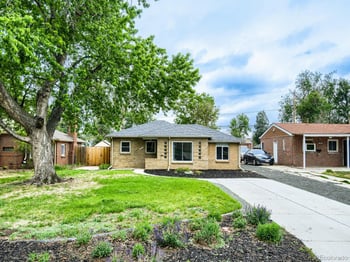
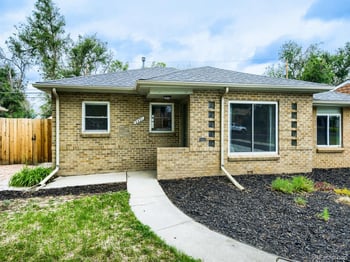
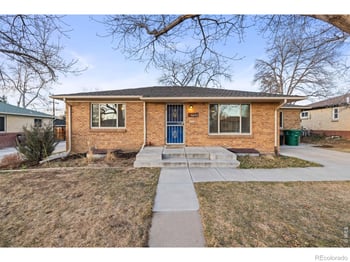
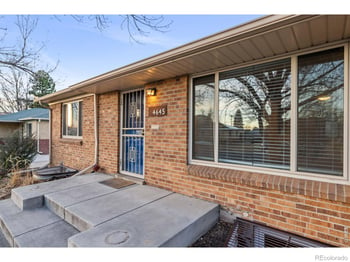
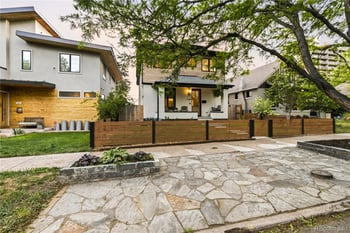
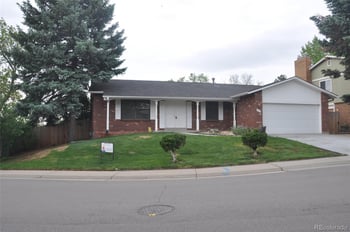
The city's established neighborhoods feature mid-century to 1990s single-family homes with mature landscaping, wider lots, and varied architectural styles. That is a different character from newer infill development in areas like Lone Tree's RidgeGate, where townhomes and tighter lot patterns dominate, and a different scale from the estate-lot character of Cherry Hills Village. For right-sizers who want established trees and lower-density surroundings without committing to an estate, Centennial's core neighborhoods offer that combination more consistently than either of those comparables.
Since 2020, Centennial has gotten a lot more diverse, which reflects broader South Denver demographic shifts. For right-sizers evaluating long-term neighborhood trajectory, that is relevant context — the community is evolving, and buyers who have lived in South Denver for decades will notice the change.
Centennial is mid-to-upper income — above the national average, above Denver — but it does not carry the ultra-premium land values of Greenwood Village or Cherry Hills Village. That gap is not just in purchase price. It shows up in ongoing carrying costs, maintenance scale, and the property tax burden that comes with estate-tier land. For right-sizers, the wealth profile question is practical: does Centennial deliver the maintained streets, safe feel, and quality retail that a prestige address provides, at a lower cost of entry? The honest answer is mostly yes — with the caveat that "mostly" depends on which part of Centennial the address is in.
The emotional stake in this question is not really about money. It is about whether choosing Centennial over a prestige address is a smart decision or a retreat. That is worth naming directly, because it shapes how right-sizers evaluate everything else about the city.
Knowing what Centennial is helps frame the comparison — but the real question for right-sizers is whether the daily experience of living there is actually simpler than the alternatives. That is where the analysis gets specific.
The community is great, shops are great — residents say it consistently, but that phrase does not tell a right-sizer whether the specific Centennial address they are considering puts those shops within a practical errand loop or a meaningful detour. The suburban feel is real. Whether it reduces friction depends on where within the city's 29.5 square miles the home actually sits.
Centennial's layout is car-dependent — wide lots, established retail corridors, no walkable urban core. For right-sizers who have already left a walkable neighborhood behind, that is not a surprise or a compromise. It is the expected format of South Denver suburban living. The relevant question is not whether you will drive, but how far and how often.
Most daily errands in Centennial are short-distance by car, which suits households whose routines center on a predictable loop: grocery run, medical appointment, dinner out. The suburban feel here means car-dependent but efficient, not isolated. That distinction matters for right-sizers evaluating whether the address will feel as settled as the one they are leaving.
Consider a household evaluating whether the area's shops, suburban layout, and perceived safety actually make everyday routines simpler. The answer is yes — conditionally. A home near the north edge of Centennial, adjacent to Greenwood Village and the Denver Tech Center, sits within a dense concentration of services. A home near the southern edge toward Parker involves meaningfully longer drives for the same errands. Two addresses with the same city name can have different daily-friction profiles, and that gap is large enough to affect the decision.
Streets at SouthGlenn — the redeveloped mixed-use center that replaced Southglenn Mall — functions as Centennial's primary neighborhood-scale retail and dining anchor. It offers groceries, dining from casual to upscale, national retail, and seasonal community events in a format that is accessible and well-parked. For right-sizers comparing daily-life friction, it represents the kind of walkable-adjacent retail cluster that makes a suburban address feel complete rather than isolated.
Arapahoe Road runs east-west through Centennial and serves as the primary commercial orientation corridor — most of the retail density that residents describe as convenient is accessible from or near this route. Understanding where a candidate address sits relative to Arapahoe Road is a practical first filter for evaluating errand friction.
Verification step: Before assuming a Centennial address delivers convenient retail access, identify which specific retail cluster is closest to that home. The city is large enough that "Centennial has good shops" is not a uniform statement. Use current mapping tools from the specific address to check drive patterns to Streets at SouthGlenn, Arapahoe Road corridor services, and any medical or specialty services the household uses regularly.
The perceived safety that residents consistently describe is a recurring theme — and it matters to right-sizers evaluating whether a new address will feel as settled as the one they are leaving. But generic quality-of-life praise does not answer practical concerns about whether Centennial actually reduces friction in daily living. The safety and community feel are real. Whether the specific address delivers on the errand-loop promise requires address-level verification, not city-level assumption.
Daily errands are one dimension of friction. The commute and DTC access question is the other — and it is where Centennial's north-edge position either earns its keep or falls short for households whose routines still center on that corridor. For a grounded picture of what South Denver daily life actually looks like across seasons, what South Denver daily routines look like through a Colorado winter extends this analysis beyond fair-weather assumptions.
The addresses sound similar on a South Denver map — but Greenwood Village, Cherry Hills Village, and Centennial are not interchangeable, and the differences matter more for right-sizers than for first-time buyers who are still building toward a prestige address rather than stepping back from one.
Greenwood Village's DTC adjacency is a genuine advantage — not just for commuters, but for households whose medical providers, professional services, and social routines are concentrated in that corridor. Cherry Hills Village delivers estate character, privacy, and equestrian history that no other South Denver suburb replicates. And the social signaling of a prestige zip code is real, not imaginary. Some right-sizers still value it, and there is no honest version of this comparison that pretends otherwise.
But those advantages come with carrying costs and maintenance scales that many right-sizers are specifically trying to escape. Cherry Hills Village, in particular, surprises buyers who focus on the land and privacy without accounting for the infrastructure absence — there is essentially no walkable retail, no quick errand loop, and total car dependency for every daily task. The estate character is genuine. The convenience is not.
A buyer or renter weighing Centennial's cost against the appeal of nearby higher-status neighborhoods like Greenwood Village or Cherry Hills Village is making a real trade-off: more practical suburban living versus the cachet of a prestige address. Centennial is on the pricier side relative to the national average and to Denver — residents are clear about that — but it sits meaningfully below Greenwood Village and Cherry Hills Village in both purchase price and ongoing carrying costs. For right-sizers, that gap is not just about the mortgage. It shows up in property taxes, HOA scale, and the maintenance footprint of an estate-tier home. Verify current mill levies with the Arapahoe County Assessor before comparing carrying costs across these addresses — the difference is material and worth calculating specifically.
Some residents want lower prices and better affordability — and that is a real tension even when the area is viewed positively. Centennial is more affordable than its prestige neighbors, and for right-sizers who want a lower-friction daily address without paying a premium for prestige, that gap is the point. The established neighborhoods, mature landscaping, and municipal stability make Centennial a lateral move in livability — not a step down — for households that are optimizing for daily ease rather than address recognition.
What the comparison actually turns on:
The honest comparison requires the reader to define what they are actually optimizing for. Centennial wins on carrying cost, lot character in the mid-range, and errand convenience. It loses on prestige address recognition and DTC adjacency for homes in the southern half of the city. Neither outcome is a failure — they are different answers to different questions.
The comparison clarifies what Centennial is and is not — but the housing stock question is where the decision gets concrete. What does a right-sizer actually find when they look at Centennial homes? For the parallel view from the Greenwood Village side, what downsizers notice first when they compare Greenwood Village with Centennial and Cherry Hills gives the other half of this picture.
Right-sizers often assume that moving out of a large South Denver home means choosing between a cramped new-construction townhome and an estate they cannot maintain. Centennial's established housing stock is the option that gets skipped in that framing — and it is worth understanding specifically what is there and what requires a patient search.
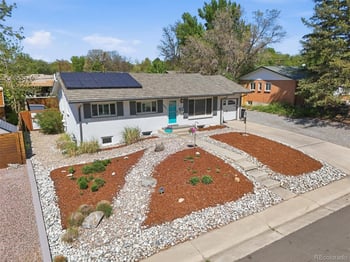
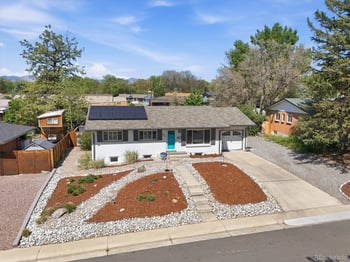
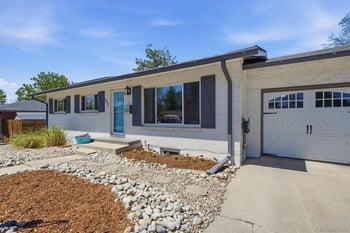
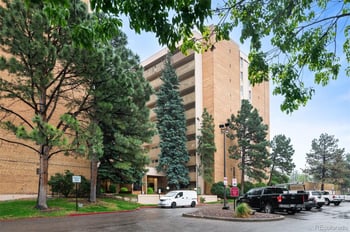
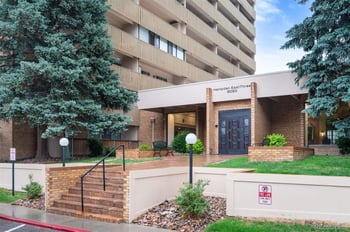
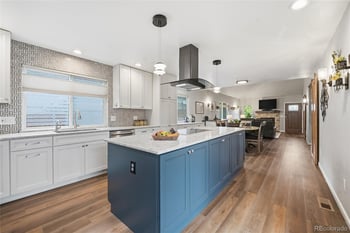
Centennial's core neighborhoods offer mid-century to 1990s single-family homes with mature landscaping, wider lots, and architectural variety that newer suburban development does not replicate. For right-sizers who want established trees, lower-density surroundings, and a home that feels lived-in rather than freshly built, this is the housing character that makes Centennial worth evaluating seriously.
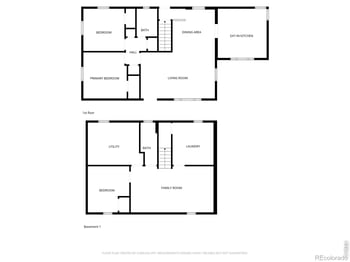
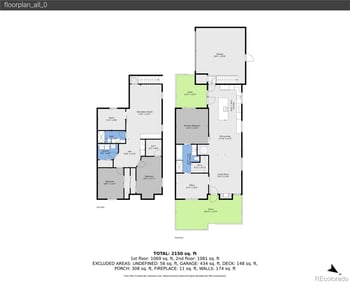
The main-floor primary bedroom question is where Centennial's older housing stock either earns its keep or requires a patient search. Ranch-style and modified two-story homes with main-floor primaries exist in Centennial — but the dominant build cycle from the 1990s produced two-story homes with the primary bedroom upstairs. That inventory mismatch is a real friction point for right-sizers who require or strongly prefer single-level living. It is not a reason to dismiss Centennial, but it is a reason to filter specifically. Work with a local agent who can run a current inventory search filtered for main-floor primary configurations in the specific Centennial neighborhoods you are considering — do not assume availability based on city-level descriptions. For a direct comparison of main-floor primary availability across Centennial and Greenwood Village, how main-floor primary inventory actually compares between Centennial and Greenwood Village covers the specific configuration most right-sizers are filtering for.
In the sub-$750,000 range, Centennial typically offers more single-family options with larger lots than comparable Lone Tree inventory — making it more affordable for right-sizers who want space without the estate-scale maintenance of Cherry Hills Village. In the $700,000–$900,000 band, Lone Tree skews newer with tighter inventory, while Centennial offers a broader spread of styles and lot sizes, which gives right-sizers more negotiating room. Treat these as relative patterns, not current market guarantees — verify active inventory with a local agent before drawing conclusions about what is actually available.
Right-sizing in South Denver does not automatically produce meaningful monthly savings. When an HOA replaces the maintenance costs of a larger home, the carrying cost difference can be smaller than buyers expect — and some HOAs in 1990s-era Centennial patio home communities carry underfunded reserve funds with special assessment risk. Right-sizers on fixed or semi-fixed incomes are poorly positioned to absorb an unexpected special assessment. Pull the HOA resale disclosure for any Centennial home under consideration — current dues schedule, reserve fund status, and any pending assessments — before comparing carrying costs across addresses.
HOA verification step: Request the HOA resale disclosure package before comparing carrying costs across Centennial addresses. Review the current dues schedule, reserve fund adequacy, and any pending or recently levied special assessments. An underfunded reserve in a 1990s HOA community is a specific risk for right-sizers on fixed income — it is not visible in the listing price.
One more risk that rarely gets flagged in South Denver: Colorado's hail belt creates real insurance premium and roof replacement cost exposure for homes in this corridor. Right-sizers on fixed income are the buyers most exposed to a large hail claim or a roof replacement cycle. Ask about the roof age and material on any Centennial home you are seriously considering, and verify current homeowners insurance quotes for that specific address before writing an offer.
Housing stock answers the "what do I get" question — but the commute and DTC access question answers "does this address actually work for my daily life," which is where Centennial's north-edge position becomes decisive.
"Close to the DTC" is one of the most repeated claims about Centennial — and it is true for some addresses and misleading for others, depending on where within the city's 29.5 square miles a home actually sits.
Centennial's north edge, adjacent to Greenwood Village and the Denver Tech Center, delivers a materially different daily-drive experience than the southern edge toward Parker. That gap is not a minor inconvenience — it is the difference between a quick drive to a medical appointment or a DTC lunch and a meaningful addition to every routine that centers on that corridor. Right-sizers who assume Centennial is uniformly convenient to the DTC may find that a home near the southern edge adds real friction to the routines they were specifically trying to simplify.
Right-sizers who still commute part-time, drive to medical appointments, or maintain active social routines in the DTC corridor should evaluate specific addresses rather than treating "Centennial" as a uniform commute answer. The same applies to households who no longer commute daily but value proximity to DTC-area services — the address-specific drive pattern matters even when the trip is occasional.
Commute verification step: Use current mapping tools (Google Maps, Apple Maps) from the specific candidate address — not from "Centennial, CO" as a city-level input — to check drive patterns to the DTC, your medical providers, and any other routine destinations. Run the check at your actual departure time, not midday. City-level averages will not reflect the address-specific reality.
For households who want to reduce car dependency rather than just shorten drives, the Dry Creek Light Rail Station offers RTD access from Centennial's northern corridor. Whether that access is practical depends on where the candidate address sits relative to the station and what the destination pattern looks like. For a dedicated look at what the Dry Creek station actually enables for car-light households, what the Dry Creek Light Rail station actually enables for South Denver right-sizers covers the specifics.
Cherry Creek School District boundaries cover much of Centennial, with Littleton Public Schools serving some areas in the western and southern portions of the city. For right-sizers without school-age children, the boundary assignment matters primarily for resale value and neighborhood character — Cherry Creek School District coverage is a recognized factor in South Denver home values. Verify current boundary assignment for any specific address with the district directly; do not assume coverage based on city location alone.
Commute and access answer the logistics question — but the final decision for most right-sizers comes down to whether Centennial is the right fit overall, which requires weighing all of these dimensions against each other and against the specific address under consideration. For a deeper look at the commute variability question with specific route framing, how commute times from Centennial to the DTC vary by address goes further than city-level averages can.
The question "is Centennial a good place to live" has a real answer for right-sizers — but it is not the same answer for every address within the city, and the difference matters more than most articles acknowledge.
Centennial fits right-sizers who want an established, safe, suburban address with mature neighborhoods, practical retail access, and a lower cost of entry than Greenwood Village or Cherry Hills Village — without giving up the South Denver orientation they already know. The suburban feel is a feature for this audience, not a compromise. The community and shops deliver on the quality-of-life promise that residents consistently describe. And the more affordable price point relative to the prestige addresses is a real advantage for households trying to reduce carrying costs, not just purchase price.
Centennial is a weaker fit for right-sizers who specifically value the social address of a prestige zip code, want walkable urban density, or need estate-scale lot character. Those households should evaluate Greenwood Village or Cherry Hills Village with clear eyes about the carrying cost difference — and with honest acknowledgment that Cherry Hills Village's land and privacy come with total car dependency for every daily errand, which is a real trade-off that the estate character does not offset.
Centennial is still pretty pricey — above the national average, above Denver — and some right-sizers find that cost is a real tension even when they view the area positively. The affordability advantage over Greenwood Village and Cherry Hills Village is genuine, but it does not make Centennial inexpensive. Right-sizers who need a meaningfully lower monthly cost structure should factor HOA dues, property taxes, and insurance costs into the comparison before assuming the address change produces savings.
Right-sizers who choose Centennial based on city-level reputation rather than address-level verification may find that the friction they were trying to escape followed them to a different zip code. The four variables that determine whether a specific Centennial address delivers on the friction-reduction promise are concrete and checkable:
Four verification steps before committing to a Centennial address:
The honest answer to whether Centennial works for a South Denver right-sizer is: yes, if the specific address delivers on the friction-reduction promise. That requires address-level verification, not city-level generalization. A local agent who knows Centennial's sub-markets — which neighborhoods have the right housing stock, which HOAs are well-funded, which addresses sit in the north-edge sweet spot — is the fastest way to run these checks without wasting time on homes that look right from the listing but fall short in practice.
For school district context that matters even when you do not have school-age children, why Cherry Creek School District boundary assignment still matters for right-sizers without kids explains the resale and neighborhood-character implications directly. And when you are ready to see what is actually available in Centennial's current inventory, current Centennial homes and listings is the place to ground the search in real options.
Your Real Estate Expert. Regarding real estate in the Denver Metro market, you deserve an expert who places your needs above all else. I'm Brian Burke, a licensed REALTOR® and seasoned real estate broker and owner of Kenna Real Estate with over two decades of experience. I've helped hundreds of home buyers and sellers navigate every transaction, and my comprehensive industry knowledge spans from appraisal to mortgage to real estate expertise.
My dedication to excellence has earned me recognition as a pricing specialist. This allows me to find the best solutions for even the most unconventional transactions to benefit my clients. Consider me your trusted Real Estate advisor for your next transaction, whether it's for yourself, a loved one, or a friend. Always choose an agent who aligns with your needs, even if that means exploring other options.
You may not be aware that I've held a REALTOR® license since 2002, dedicating my time to becoming an authority in all aspects of Residential Real Estate and Construction. In addition, I established my own Real Estate brokerage firm, providing comprehensive 360-degree Real Estate services, from the initial acquisition of a client's first Real Estate asset to the disposition of their entire Real Estate portfolio.
My commitment is unwavering in delivering top-notch service that consistently exceeds my clients' expectations, whether you're selling or buying. Even after the transaction is complete, I remain your lifelong REALTOR®, ready to assist you at any time. When you, your family, or friends choose me as your Real Estate agent, I promise to be the best agent you've ever worked with in the Real Estate industry.
Proudly serving Arapahoe, Douglas, El Paso, Denver, Jefferson, Weld, Lairmer, Elbert, Broomfield, Boulder, and Adams Counties! I have a team of anents in most Colorado cities from Fort Collins, to Grand Junction, to Denver, and Colorado Springs.
This is what You Get when I sell your house:
When it comes to your real estate, trust in a dedicated professional who puts your goals first. Contact me, Brian Lee Burke, today, and let's turn your real estate dreams into reality.