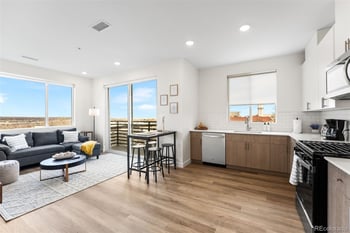
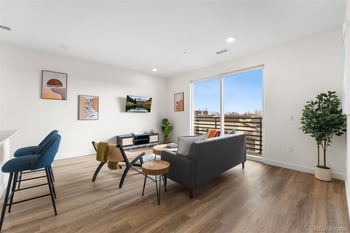
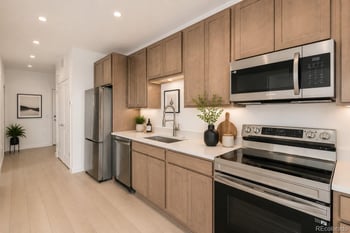
New - 15 Hours Ago



$299,990
Active
--
Beds
1
Baths
499
Sqft
--
Acres
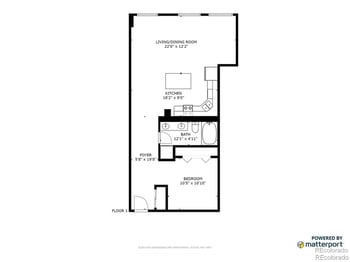
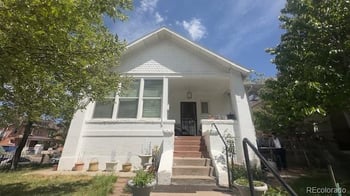
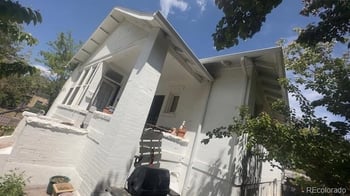
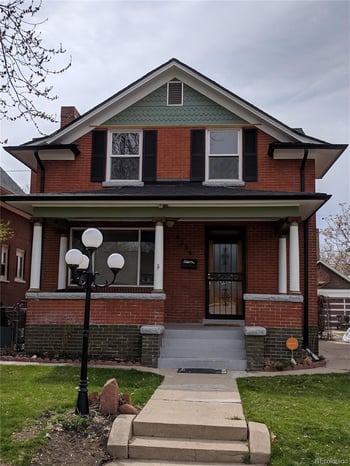
1634 Sheridan Blvd #101, Denver, CO 80204
MLS#: REC8241612
.jpg)



TL;DR
Helping aging parents right-size to South Denver works backward from your parent's daily routine and projected care needs — not from a neighborhood list — because the most common mistake is choosing a home for the parent your parent is today rather than the parent they will be in two years. The decision turns on four levers: independence level, proximity to your own address in Centennial, Greenwood Village, or Cherry Hills Village, housing type matched to care needs, and a total cost estimate that includes care and accessibility modifications alongside the purchase price.
Every other guide about moving parents to Denver starts with a neighborhood list. This one starts with your parent's Tuesday morning and works outward from there — because the neighborhood question only makes sense after you know what your parent actually needs to get through a day safely and comfortably.
Deciding whether an aging parent is ready for a care home can feel overwhelming, emotional, and uncertain. That is not a personal failing. It is the nature of a decision that involves a parent's dignity, your own capacity to help, and a housing market that does not pause while you figure it out. Helping aging parents transition is genuinely hard, and most relocation frameworks are not built for it — they are built for people who already know what they want and just need to find it.
This framework is different. It works backward from four concrete decision levers:
The Four Decision Levers
Adult children feel overwhelmed deciding whether a parent is still independent enough or needs a care home — and that overwhelm is compounded when the geography is unfamiliar. The real risk is not picking the wrong zip code. It is picking the right zip code for the wrong stage of independence, then having to move again in 18 months because the housing choice did not absorb the next transition.
Before any neighborhood comparison makes sense, you need a clear read on where your parent actually sits on the independence-to-care spectrum. That is where this starts.
The most expensive mistake families make in this process is buying a home for the parent their parent is today, not the parent they will be in 24 months. A parent who is managing fine right now may be one fall, one medication change, or one driving incident away from needing a level of support that a private home purchase cannot provide.
There are three structurally distinct options on the table, and they carry different housing implications:
Three Housing Paths — What Each One Requires
Private home (with or without in-home care)
Your parent owns or rents a residence. In-home care can be layered on. Works when your parent can be safely alone overnight and manage most daily tasks. Ranch-style and single-level homes in Centennial are structurally well-suited to this path — no stairs, often with outdoor space, and close to family in the surrounding South Denver corridor.
Independent living community
A community setting with social programming but no on-site medical care. Works when your parent is socially isolated at home but medically stable. Does not solve medication management or overnight safety concerns.
Assisted living
A licensed facility offering 24-hour assisted living care services, including medication management, grooming support, nursing oversight, and special diets. This is the appropriate level when your parent can no longer safely manage these independently — and it is a different housing category entirely from a private home purchase.
Map your parent's current daily routine against three concrete markers: can they manage medications without reminders, can they handle grooming and mobility without help, and can they be safely alone overnight? If the answer to any of these is no — or likely to become no within two years — a private home purchase in Centennial may create a second move. Factor that transition cost into the decision now, not after closing.
Parents may resist leaving home even when 24-hour oversight, medication help, or grooming support is needed. This is one of the most common friction points families encounter, and naming it directly is the first step before any neighborhood conversation can be productive. A parent who insists they are fine living alone may genuinely be fine — or may be masking early signs that will surface after the move, and the housing choice you make now either absorbs that transition or forces another one.
The right approach is to visit multiple South Denver communities and compare independent living versus assisted living in person, with the goal of finding out what would be the best fit before committing to a housing type. That comparison visit is not a sign of indecision. It is the most useful thing you can do before putting an offer on anything.
If your parent is a candidate for assisted living — now or within two years — the South Denver corridor does have options offering 24-hour assisted living care services. Knowing whether your parent falls into that category changes which housing types are even on the table. For a deeper look at how care needs map to specific South Denver housing options, this breakdown of care levels and South Denver housing fit is a useful next step.
Once you have a realistic read on care needs, the next question is which of the three South Denver nodes — Centennial, Greenwood Village, or Cherry Hills Village — actually puts you close enough to help on a Tuesday afternoon.
"Close to family" is the most common reason adult children give for choosing South Denver. But close on a map and close on a Wednesday at 5:30pm are two different things — and the gap between them changes whether the support arrangement you are planning is actually sustainable.
Families want proximity to adult children in Centennial, Greenwood Village, or Cherry Hills Village without sacrificing the right level of care. The honest trade-off is that the closest housing option is not always the best care fit — and the best care fit is not always the closest to your front door.
Drive time along I-25 and C-470 varies significantly by time of day. Peak congestion runs southbound toward Centennial in the late afternoon, and a home that feels close on a Sunday afternoon may add meaningful time during the hours you will most often be making support visits. Before finalizing any address, drive the actual route on a weekday at the time you will most often travel. Do not rely on a map app's default estimate.
Moving a parent closer to Centennial so family can help with meals, check-ins, and day-to-day support is a concrete scenario that reshapes the housing search. You are not just finding a home — you are engineering a support radius. That means the distance from your parent's front door to yours matters as much as the home's features.
Cherry Hills Village looks like the obvious choice if you already live there. But its low-density, larger-lot profile means your parent may be entirely dependent on you for every errand — groceries, medical appointments, pharmacy runs. That does not reduce the support burden. It concentrates it on you.
A parent without a car in Cherry Hills Village has limited options for independent daily life. The infrastructure that makes Cherry Hills Village appealing — land, privacy, quiet — is also the infrastructure that makes it car-dependent for everything. That is not a reason to rule it out, but it is a reason to be specific about what "close to family" will actually require of you week to week.
Greenwood Village sits between Centennial's family-density and Cherry Hills Village's low-density profile. It offers a middle ground, but walkable amenity access varies significantly by specific address. Verify what is actually reachable on foot or by transit from any candidate home before assuming convenience. For a ground-level look at how daily life actually differs across these three nodes, what downsizers notice first about daily life in Greenwood Village versus Centennial and Cherry Hills is worth reading before you commit to a geography.
Proximity Verification Workflow
Proximity narrows the geography, but it does not settle the housing type question. The condo-versus-ranch decision in these three nodes carries trade-offs that most families do not see until after closing — and that is where the next section lives.
The housing type question sounds like a preference conversation — ranch or condo, yard or no yard. For aging parents, it is actually a care-planning decision dressed up as a real estate choice. The home that feels right on a Saturday showing may be the home that forces a second move in 18 months.
Centennial's detached single-family homes on larger lots skew toward ranch-style and single-level configurations. These are structurally well-suited to aging parents who need to avoid stairs but still want outdoor space and proximity to family in the South Denver corridor. The Cherry Creek School District feeder zones that run through Centennial also drive consistent resale demand — which matters if circumstances change and the home needs to sell quickly.
That said, the South Denver corridor's dominant housing stock from the 1990s build cycle is two-story with the primary bedroom upstairs. Main-floor primary bedroom homes exist, but they are not the default inventory. If single-level living is a hard requirement, narrow the search specifically to ranch configurations and verify the floor plan before scheduling a showing. For a detailed look at which home configurations in Centennial and Greenwood Village actually deliver main-floor living, this breakdown of main-floor primary homes in Centennial and Greenwood Village is the most useful starting point.
Older ranch homes may also need accessibility retrofits — grab bars, ramp installation, walk-in shower conversion — that are not visible during a standard inspection. Budget for a separate accessibility assessment before closing, not after.
Condos and attached homes reduce the maintenance burden for parents who cannot manage yard work or exterior upkeep. Snow removal, landscaping, and exterior repairs disappear from the to-do list. That is the specific maintenance that goes away — not all maintenance. Interior repairs, appliance replacement, and unit-level systems remain the owner's responsibility.
Here is the tension most families do not see until they are under contract: accessibility modifications to a condo — grab bars, threshold ramps, shower conversions — often require HOA board approval, and that process can take months. The low-maintenance appeal is real, but the trade-off is less control over the living environment and a slower path to necessary modifications. Pull the HOA resale disclosure for current dues, rules, and any pending special assessments before any offer. Many 1990s-2000s HOA communities in Centennial and Greenwood Village carry underfunded reserve accounts, which creates special assessment risk — a significant exposure for a parent on a fixed or semi-fixed income.
Right-sizing in South Denver also does not automatically produce meaningful monthly savings. When HOA fees replace the maintenance costs your parent was previously absorbing, the net monthly number can look similar to what they were spending before. Run the actual comparison before assuming a condo is the financially simpler path.
Housing Type Comparison Across Three South Denver Nodes
Centennial Ranch SFR
Maintenance burden: full exterior ownership / Accessibility fit: strong if single-level / HOA: varies by community — pull resale disclosure / Resale flexibility: strong, driven by Cherry Creek School District feeder demand
Condo or Attached Home
Maintenance burden: exterior covered by HOA / Accessibility fit: modifications require board approval / HOA: check reserve fund adequacy and special assessment history / Resale flexibility: depends on HOA financial health
Cherry Hills Village Luxury Home
Maintenance burden: full exterior ownership on larger lots / Accessibility fit: depends on floor plan — verify single-level availability / HOA: typically minimal or none / Resale flexibility: longer market time at the luxury price tier; verify school boundary assignment with Cherry Creek School District directly
There is uncertainty about which South Denver option is the best fit for daily routine, care needs, and budget — and that uncertainty is legitimate, because the answer genuinely depends on the specific combination of your parent's mobility, your proximity, and the specific home's floor plan. The goal is to find out what would be the best fit before committing, not after. For a side-by-side look at how Greenwood Village's specific home inventory compares to Centennial and Cherry Hills Village for right-sizers weighing housing type, this guide to Greenwood Village home options for right-sizers covers the daily-life and inventory trade-offs in detail.
Once the housing type is settled, the budget conversation gets specific — and that is where families often discover that the right fit and the affordable fit are not the same address.
Most families budget for the home and forget to budget for the move itself — and the moving industry has specific patterns that cost families of aging parents more than almost any other demographic. The financial picture for a South Denver right-size has more line items than most families anticipate going in.
The cost of living in South Denver's premium nodes — Greenwood Village and Cherry Hills Village especially — is higher than national averages. That gap compounds when you add in-home care, accessibility modifications, and HOA fees on top of the purchase price. Families who plan only for housing often face a budget shortfall when care needs emerge six months after the move.
Build a two-year total cost estimate alongside the housing budget. That estimate should include: projected in-home care hours and frequency, accessibility modification costs (grab bars, shower conversion, ramp installation), HOA dues and reserve fund exposure, and the cost of a second move if the housing type does not absorb the next care transition. Work through that estimate with a local care coordinator who knows the South Denver market, not just a real estate agent.
Families struggle with the emotional difficulty of hard conversations and the pressure to act before a crisis — and that pressure often compresses the budget planning process. A rushed decision made under crisis conditions is the scenario that produces the most regret. As hard as it is, making the plan visit before committing to a housing type or location is so much better on the back end. Families who tour options in person before deciding consistently report fewer regrets than those who decide remotely.
A low moving estimate feels like good news until the truck is loaded and the final invoice is double the quote. At that point, your parent's belongings are on the truck and your negotiating position is gone. This is a documented pattern in the moving industry, and families coordinating a parent's relocation are particularly vulnerable because the emotional stakes make it harder to push back.
Mover Vetting Checklist
Even with the budget mapped and the movers vetted, the hardest part of this process is not logistical. It is the conversation with your parent about what they are giving up — and that is where the next section lives.
Most adult children wait too long to have this conversation — not because they do not care, but because they do not want to be the person who tells a parent their independence is changing. That instinct is understandable. It is also the instinct that leads to emergency room decisions made at 2am with no good options on the table.
The conversation you avoid today does not disappear. It resurfaces as a crisis — a fall, a driving incident, a medication error — and at that point the careful framework this article describes gets compressed into a 48-hour decision window. Having the conversation early gives everyone more options, including your parent.
Parents may resist leaving home even when 24-hour oversight, medication help, or grooming support is needed. That resistance is not irrational — it is a response to loss, and it deserves to be treated as such. The families who navigate this most successfully are not the ones who present a decision already made. They are the ones who make the plan visit together, touring options with their parent rather than for their parent. It's very difficult, but just make the plan visit — the shift from "I've decided" to "let's go look together" changes the dynamic from loss to agency, and parents who feel included in the decision are more likely to settle in successfully.
A Concrete Way to Open the Conversation
Rather than framing the conversation around what your parent is losing, name specifically what you can provide: "I can stop by twice a week, handle one grocery run, and take you to one medical appointment a month." Concrete commitments ground the conversation in logistics rather than emotion. They also help your parent understand what the proximity actually means for their daily life — which is the thing they are most uncertain about.
The goal is not to convince a parent to move. It is to find out what would be the best fit for their life at this stage, with their input, before circumstances remove the choice. The short-term emotional stress of having the conversation is real — but the long-term peace of mind and family closeness that comes from a planned transition, made while your parent still has full agency, is what makes it worth having early. To help make the post-move daily life feel concrete and less abstract before that conversation, what right-sizers notice first about daily life in Greenwood Village after the move is something worth sharing with your parent directly.
Once the conversation has happened and your parent is engaged in the process, the final step is making sure the move itself — the logistics, the timeline, the first weeks in South Denver — actually goes the way you planned.
Everything in this article collapses into four steps — and the order matters as much as the steps themselves. Skipping step one makes every subsequent decision harder to undo, and most families who end up making a second move within two years did so because they started at step three before completing step one.
The Four-Step Sequence
Step 1 — Honest care assessment
Use the independence markers from the section above: medications, grooming, overnight safety. Build a two-year projection, not just a today snapshot. If assisted living is likely within two years, that changes which housing types are on the table.
Step 2 — Proximity mapping
Map your own address in Centennial, Greenwood Village, or Cherry Hills Village against the three housing nodes. Drive the actual route at your actual support-visit times. Identify which geography puts you within a realistic support radius — not a theoretical one.
Step 3 — Match housing type to care needs and budget
Ranch SFR for aging-in-place with outdoor space and resale flexibility. Condo or attached home for low-maintenance independence — but verify HOA reserve fund health and modification rules before assuming it is the simpler path. Cherry Hills Village luxury home for higher-budget right-sizers who value low-density living and privacy, with the understanding that car dependency is total. Pull HOA resale disclosures and verify school boundary assignments at the address level with Cherry Creek School District before any offer.
Step 4 — Vet movers, build the full cost estimate, and make the plan visit
Verify any mover via USDOT lookup. Build a two-year total cost estimate that includes care, accessibility modifications, and HOA exposure. Then just make the plan visit — with your parent, in person, before any decision is final.
There is uncertainty about which South Denver option is the best fit for daily routine, care needs, and budget — and that uncertainty does not fully resolve until you have completed all four steps. The signal that you are ready to move forward is not that the decision feels easy. It is that you can answer one honest question: are you choosing this home for the parent your parent is today, or for the parent they are likely to be in two years — and does the housing type absorb that transition or force another move?
Two Document Checks Before Any Offer
Helping aging parents transition is not a linear process, and it rarely goes exactly as planned. But families who work through these four steps — in order, with their parent involved — consistently end up with fewer regrets and fewer second moves. The framework is complete. The most important thing to carry out of it is not the checklist. It is the permission to have the hard conversation early, while your parent still has full agency in the decision. For the next step after completing this framework — matching your specific care and budget profile to South Denver options — this guide to South Denver fit by care needs, budget, and family proximity picks up where this one leaves off. And if you want to understand how the Cherry Creek School District affects resale value and neighborhood character even when your parent has no school-age children, what Cherry Creek School District means for right-sizers without kids is worth reading before the housing type decision is final.
Your Real Estate Expert. Regarding real estate in the Denver Metro market, you deserve an expert who places your needs above all else. I'm Brian Burke, a licensed REALTOR® and seasoned real estate broker and owner of Kenna Real Estate with over two decades of experience. I've helped hundreds of home buyers and sellers navigate every transaction, and my comprehensive industry knowledge spans from appraisal to mortgage to real estate expertise.
My dedication to excellence has earned me recognition as a pricing specialist. This allows me to find the best solutions for even the most unconventional transactions to benefit my clients. Consider me your trusted Real Estate advisor for your next transaction, whether it's for yourself, a loved one, or a friend. Always choose an agent who aligns with your needs, even if that means exploring other options.
You may not be aware that I've held a REALTOR® license since 2002, dedicating my time to becoming an authority in all aspects of Residential Real Estate and Construction. In addition, I established my own Real Estate brokerage firm, providing comprehensive 360-degree Real Estate services, from the initial acquisition of a client's first Real Estate asset to the disposition of their entire Real Estate portfolio.
My commitment is unwavering in delivering top-notch service that consistently exceeds my clients' expectations, whether you're selling or buying. Even after the transaction is complete, I remain your lifelong REALTOR®, ready to assist you at any time. When you, your family, or friends choose me as your Real Estate agent, I promise to be the best agent you've ever worked with in the Real Estate industry.
Proudly serving Arapahoe, Douglas, El Paso, Denver, Jefferson, Weld, Lairmer, Elbert, Broomfield, Boulder, and Adams Counties! I have a team of anents in most Colorado cities from Fort Collins, to Grand Junction, to Denver, and Colorado Springs.
This is what You Get when I sell your house:
When it comes to your real estate, trust in a dedicated professional who puts your goals first. Contact me, Brian Lee Burke, today, and let's turn your real estate dreams into reality.