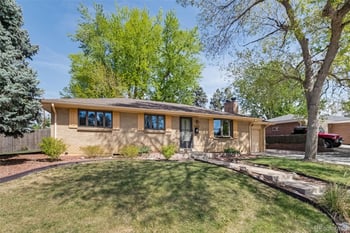
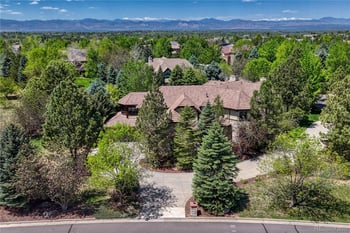
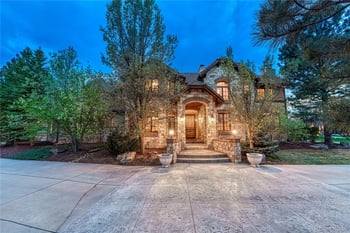
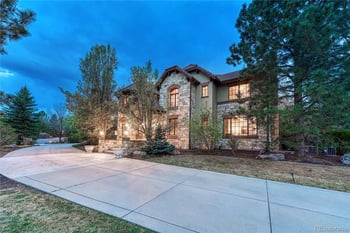
New - 1 Hour Ago

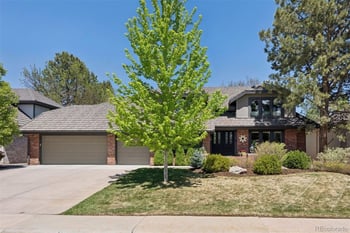
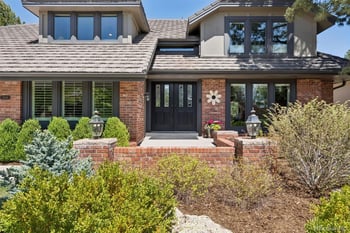
$1,350,000
Active
4
Beds
4
Baths
3557
Sqft
0.24
Acres
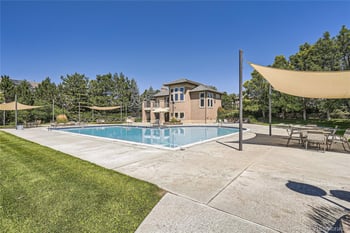
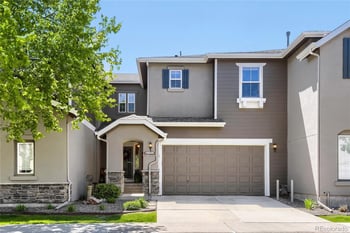
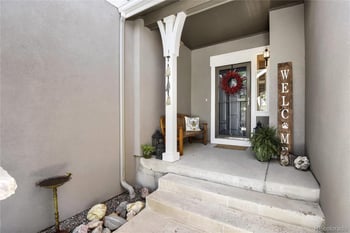
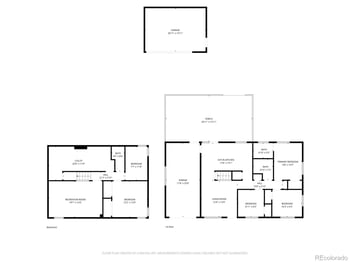
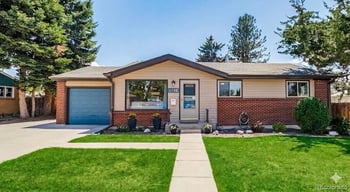
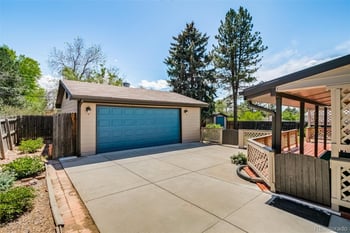
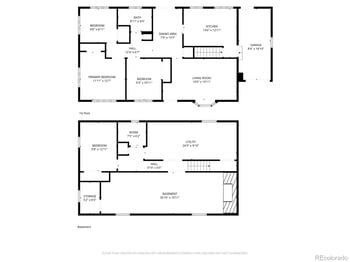
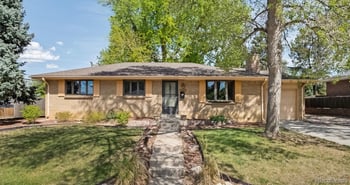
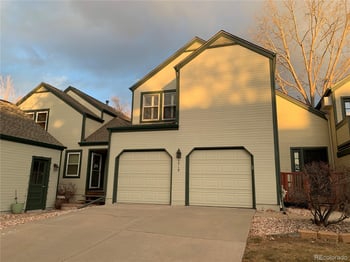
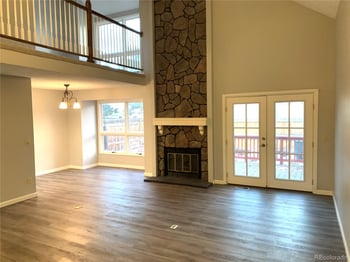
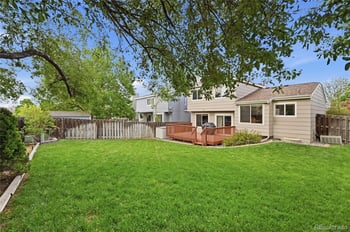
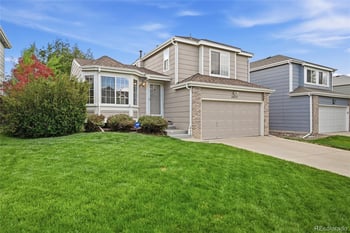
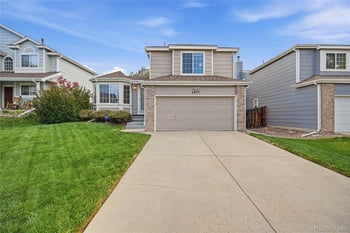
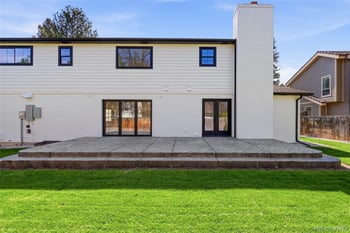
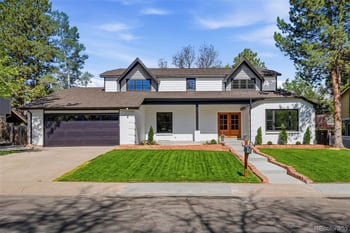
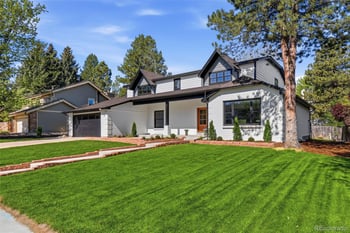
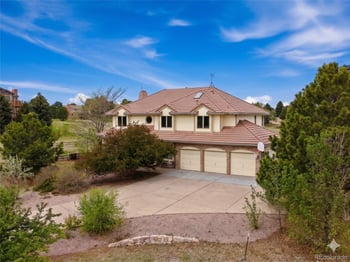
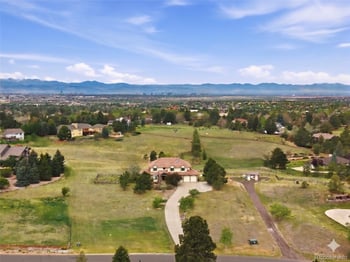
7856 Fairfax Ct, Centennial, CO 80122
MLS#: REC5338367
.jpg)


TL;DR
Centennial, Greenwood Village, and Cherry Hills Village sit within a few miles of each other in south Denver, share most of the Cherry Creek School District, and all carry a luxury price premium — but they deliver meaningfully different daily lives, and the wrong choice for a right-sizer often comes down to lot size, walkability, and a cost stack that turns out to be harder to justify than the address suggested.
Every article about these three suburbs calls them great places to live — but that framing is useless when you're deciding which one to actually buy into at this stage of life. The lifestyle praise is consistent. The trade-off analysis is almost nonexistent.
What makes this comparison genuinely hard is that Centennial, Greenwood Village, and Cherry Hills Village look interchangeable from the outside. They share a zip code cluster, a luxury price tier, and — for most addresses — the Cherry Creek School District. Cherry Hills Village sits to the southwest, Greenwood Village occupies the central position adjacent to the Denver Tech Center, and Centennial spreads east and south across a larger footprint. On a map, they're neighbors. In daily life, they're different decisions.
Right-sizers face a specific matrix that generic suburb rankings don't address: lot size versus maintenance burden, walkability versus privacy, tax structure versus amenity access. High housing and living costs that make the premium feel hard to justify for some buyers are a real friction point in all three — but the specific reasons the premium feels hard to justify differ sharply depending on which community you're in.
The four trade-off dimensions this article covers:
One important structural note: some Greenwood Village addresses fall into Littleton Public Schools rather than Cherry Creek. School district alone is not a sufficient differentiator here — verify your specific address at cherrycreekschools.org before assuming district assignment.
The differences that matter most to right-sizers aren't in the brochure. They show up in your daily routine, your tax bill, and your lot maintenance calendar — and a resident who likes the area enough to want to live there again can still tell you the price was a major drawback once the full picture came into focus.
Picture your Tuesday at 11am after the move — where are you going, how are you getting there, and how long does it take? The answer is completely different depending on which of these three communities you chose.
Cherry Hills Village CO daily life is built around the property, not around the neighborhood. Private trails, equestrian culture, and estate maintenance fill the calendar. Groceries and dining require a 10–15 minute drive from most addresses — there are no walkable commercial nodes, by design. The zoning that creates the privacy also eliminates the convenience. Before you close, drive from the specific property's driveway to your preferred grocery store, pharmacy, and dining corridor and time it honestly. That drive is your Tuesday, every Tuesday.
A Cherry Hills Village resident who uses nearby shops and strip malls finds the options only okay — not a true fit for daily needs. The commercial and amenity fit problem here isn't about quality; it's about proximity and right-sizing. The strip mall options along Belleview or nearby corridors exist, but they don't truly suit needs for buyers who want daily convenience woven into their routine rather than bolted on as a separate car trip.
Greenwood Village offers the most connected daily pattern of the three. The area is historically associated with walkable amenity clusters — including The Landmark shopping and dining district and DTC entertainment corridors — that give right-sizers short-hop access to restaurants, retail, and services. Verify the current tenant mix and your specific walking radius from any candidate address before assuming access; what's walkable from one Greenwood Village address may require a drive from another.
Here's the tension: residents still flag that Greenwood Village is not very walkable in the full pedestrian sense, and limited bike lanes mean the infrastructure between amenity clusters is thinner than buyers expect. The amenity clusters exist. The sidewalk and bike network connecting them does not always match. That gap matters for right-sizers who want to genuinely reduce car dependence, not just reduce driving distance.
Centennial's daily pattern involves longer errand runs and heavier car dependence than Greenwood Village. The community spans a large geographic area, and outdoor facility access — including areas near South Suburban Golf Club — is a genuine draw. But the family-oriented neighborhood character that makes Centennial work well for households with school-age children can feel like a mismatch for right-sizers whose daily routine no longer centers on school runs and weekend sports schedules.
Walkability gaps and winter maintenance issues make car dependence more pronounced across all three communities, but Centennial's spread amplifies this. Buyers coming from warmer climates should review what Colorado winter actually adds to south Denver car dependence before assuming suburban infrastructure handles snow the way they're used to.
Daily routine fit is personal, but the cost structure underneath it is not — and that's where the premium gets harder to justify once you start adding up what you're actually paying for the address.
The lot size minimum in Cherry Hills Village isn't just a zoning rule — it's a lifestyle commitment that comes with a grounds maintenance calendar most right-sizers haven't fully priced in before they fall in love with the property.
Cherry Hills Village enforces minimum lot sizes of approximately 2.5 acres in most residential zones. That delivers genuine privacy — horse pastures, long driveways, no commercial traffic, real separation from neighbors. But buyers are purchasing significant land maintenance responsibility alongside the home. It can get expensive in ways that compound: the grounds, the irrigation, the fencing, the driveway maintenance, the outbuildings. Verify specific zoning minimums for any candidate parcel with Arapahoe County or the Village's planning department, because the commitment varies by zone.
Cherry Hills Village carries the highest land premium of the three. Pull recent comparable sales with your agent to calibrate current pricing — but beyond the purchase price, honestly assess whether the land, the equestrian culture, and the privacy scale match your actual daily life, or whether this is an aspirational purchase that will feel oversized within two years. A resident who likes the area enough to want to live there again can still find the price a major drawback once the full cost stack becomes visible.
Greenwood Village lots typically range from approximately 0.25 to 1.5 acres, with a mix of single-family homes, townhomes, condos, and gated communities. That range makes it the most flexible right-sizing market of the three. Buyers who want to shed maintenance without leaving the luxury tier have real options here — including attached product near DTC corridors that supports main-floor primary living.
The townhome and condo tier in Greenwood Village is rarely framed as a deliberate right-sizing fit — most coverage treats it as a step down. It isn't. It's the inventory that actually matches a post-kids life. That said, right-sizing in South Denver often does not produce meaningful monthly savings when HOA dues replace the maintenance costs you're shedding. Always pull the HOA resale disclosure package before closing to confirm current dues, reserve fund health, and any pending special assessments — many 1990s and 2000s-era HOAs in this corridor are underfunded and carry special assessment risk that buyers on fixed or semi-fixed incomes are poorly positioned to absorb.
For a closer look at which specific home configurations in Greenwood Village and Centennial actually serve right-sizer mobility and maintenance needs, the main-floor primary home inventory in both communities is worth reviewing before you narrow your search.
Centennial offers the broadest inventory and the most accessible price entry point of the three. The family-oriented single-family neighborhoods are well-established, and the lower HOA fees relative to Greenwood Village are real — but address recognition matters too, and Greenwood Village carries stronger address recognition in the South Denver market. Both sides of that trade-off are worth naming honestly.
The deeper question for right-sizers is whether the neighborhood character matches their current life stage. If the answer is that it doesn't truly suit needs — that the scale feels too family-oriented, the neighborhood too suburban in the school-run sense — that's a livability mismatch that no amount of value-tier pricing resolves. One structural note worth flagging: the dominant housing stock from the 1990s build cycle across south Denver is two-story with the primary bedroom upstairs. Main-floor primary bedroom inventory is genuinely scarce, and right-sizers who require or strongly prefer single-level living should filter for it explicitly rather than assuming it's available.
Once you've matched the housing type to your actual life, the tax structure across these three communities becomes the next number that changes the decision.
The sticker price on a Cherry Hills Village estate is only the first number — the annual cost stack underneath it is what actually determines whether the premium makes sense for a right-sizer's budget.
Property tax obligations differ across the three communities based on assessed value and applicable mill levies. Do not assume a higher-priced home in Cherry Hills Village carries the same effective tax rate as a comparable-value home in Centennial. Confirm the current mill levy for any specific address with the Arapahoe County Assessor — mill levies vary by parcel, and the difference can be material. For a detailed breakdown of how Arapahoe County property taxes actually work across these cities, what south Denver buyers actually pay by city is worth reviewing before you model your monthly costs.
Wealth shapes how these communities are run, and that dynamic can impact everything about the way services, zoning, and community priorities are managed. Cherry Hills Village's prohibition on commercial development is a structural fact — it preserves the residential character and the privacy, but it also means the community generates less sales tax revenue locally, which affects how municipal services are funded. Buyers should verify current service levels and any special district obligations attached to a specific parcel.
The combined cost of property taxes, HOA dues, and estate maintenance in Cherry Hills Village can make the premium feel hard to justify for buyers who are right-sizing to reduce financial complexity, not add it. Centennial's broader tax base and larger commercial corridor generally support municipal services at a lower per-household cost burden — but verify any metro district or special district obligations on a specific address, as these vary by subdivision.
Three-step cost verification before closing:
Even buyers without school-age children carry Cherry Creek School District tax obligations — understanding how school district taxes factor into the cost structure for right-sizers without kids is part of the full cost picture, not an afterthought.
Cost structure is one side of the ledger. The social atmosphere and safety environment are the other — and they're more connected to the cost premium than most buyers expect.
The safety and privacy benefits of these communities are real — but they come packaged with a social atmosphere that buyers rarely evaluate as rigorously as they evaluate the kitchen or the commute.
Cherry Hills Village is genuinely a community of super wealthy folks — it consistently ranks among the highest-income communities in Colorado — and that concentration shapes the social atmosphere in ways that feel like a benefit to some buyers and a source of daily friction to others. Residents observe that wealth and status shape the social atmosphere in ways that make it important to be selective about who you spend time with. Wealth-driven social dynamics, including entitlement and money-conscious behavior, are a documented friction point here, not an occasional anecdote.
Privacy in Cherry Hills Village is structural. Large lots, long driveways, and no commercial traffic mean genuine separation from neighbors and the public. The private clubs historically associated with the community — including Cherry Hills Country Club and Glenmoor Country Club — reinforce that separation; verify current membership access and status directly with each club. For right-sizers who have spent decades in corporate status culture and are actively trying to leave it behind, buying into Cherry Hills Village can recreate the social pressure they were escaping. Spend time in the community socially before committing — not just during property tours.
Greenwood Village has a very safe neighborhood reputation that residents consistently point to as one of its defining characteristics. The heavy police presence is real and visible — it's part of why the community feels well-run and secure.
But the same visibility that makes the neighborhood feel secure can also make it feel monitored and restrictive, depending on your background and what you're used to. Privacy and safety benefits that come with visible policing and affluent enclaves are genuine — and they can also feel socially restrictive in ways that aren't obvious during a property showing. The experience is not uniform. It depends on who you are.
Social fit is a legitimate due-diligence item. Attend a community event, visit a local coffee shop or strip mall on a weekday morning, and spend time in the neighborhood outside of scheduled tours. The social atmosphere of a community is as durable as the zoning — and harder to change after closing.
Centennial's social atmosphere is more family-oriented and less status-driven than the other two. For some right-sizers that's a relief. For others it's a mismatch — the neighborhood energy still reads as oriented around school-age children and weekend youth sports, which can feel like the wrong frequency if that chapter of life is behind you.
Social fit and safety are personal variables. The commute and connectivity picture is more objective — and it's where Greenwood Village's DTC adjacency creates a structural advantage the other two can't replicate.
If you have any reason to get to the Denver Tech Center regularly — consulting work, board meetings, medical appointments at Swedish Medical Center or Sky Ridge Medical Center, or just dinner — where your house sits relative to DTC is not a minor detail. It's a recurring cost in time and energy that compounds across a month.
Greenwood Village's adjacency to DTC gives it a structural commute advantage for buyers with any remaining professional or consulting activity. Many Greenwood Village addresses put DTC within a short drive or a walkable distance, and RTD light rail access along the southeast corridor adds a car-free option that neither Cherry Hills Village nor most of Centennial can match. Verify commute time from any specific address during actual peak hours — not a Sunday afternoon mapping app run.
Cherry Hills Village's southwest position means DTC commutes run through or around Greenwood Village, adding distance and traffic variability. The I-25 corridor and routes like US-285 carry peak-hour congestion that doesn't show up in off-peak estimates. Drive your actual intended route on a Tuesday morning before closing, not on a weekend.
Centennial's eastern and southern position relative to DTC means commutes depend heavily on which part of Centennial the home is in. The community spans enough area that two homes with the same city name can have meaningfully different commute profiles — the address matters more than the municipality. For buyers evaluating whether Centennial's specific location relative to DTC actually works for their schedule, how Centennial's DTC commute actually breaks down by neighborhood is worth examining before ruling it in or out.
For right-sizers who are fully remote or retired, DTC proximity matters less — but proximity to Denver International Airport via E-470, medical facilities, and cultural venues in Denver proper becomes the relevant connectivity measure. All three communities require a car for those trips. Walkability gaps and winter maintenance issues make car dependence more pronounced across the board, and that reality doesn't change with the address.
Before closing: Drive your actual route from the specific property's driveway on a Tuesday at 8am and again at 5:30pm. Do not rely on mapping app estimates or Sunday test drives. The I-25 and Arapahoe Road interchange is the primary orientation landmark for this corridor — peak-hour behavior there tells you what your commute actually looks like.
Commute and connectivity narrow the field for buyers with active schedules. For those who are fully retired or remote, the decision pivots back to the daily-life and right-sizing fit questions — which is where the final framework comes in.
Every buyer in this market has a version of the same fear: paying a significant premium for a community that turns out to be the wrong fit for the life they're actually living now — not the life they had five years ago, and not the aspirational one.
The community with the best reputation — Cherry Hills Village — is also the one most likely to feel oversized, isolating, and expensive for a right-sizer who hasn't honestly stress-tested the daily routine. The estate scale, the car dependency for every errand, the cost stack, and the wealth-concentrated social atmosphere are all features for the right buyer. For a buyer who is right-sizing to simplify, they can become the exact friction they were trying to escape.
Run the decision in this order:
Cherry Hills Village fits right-sizers who genuinely want estate-scale privacy, equestrian or private club culture, and are prepared for the full cost stack — property taxes, estate maintenance, and 10–15 minute drives for every errand. The commercial and amenity fit problem is real: nearby retail options along Belleview and adjacent corridors are only okay and don't truly suit needs for buyers who want daily convenience. The premium is durable as a prestige asset. Whether it's justified as a livability asset depends entirely on whether the estate scale matches your actual life.
Greenwood Village fits right-sizers who want to reduce home size and maintenance burden without leaving the luxury tier, who value walkable amenity access and DTC proximity, and who can tolerate a more visible policing environment in exchange for daily convenience. It is the most flexible right-sizing market of the three — but right-sizing here often doesn't produce meaningful monthly savings when HOA dues replace the maintenance costs you're shedding. Verify the numbers before assuming the move simplifies your finances. For a deeper look at how Greenwood Village's daily life and home options actually serve right-sizers, the specifics are worth reviewing before you commit.
Centennial fits right-sizers who prioritize value, outdoor access, and a lower-pressure social atmosphere over prestige address or walkability. Lower HOA fees relative to Greenwood Village are a real advantage — but address recognition matters in resale, and Greenwood Village carries more of it in the South Denver market. Buyers should honestly assess whether the family-oriented neighborhood character matches their current life stage. Streets at SouthGlenn and similar Centennial commercial corridors offer more retail convenience than Cherry Hills Village, but the community still requires full car dependence for daily errands.
No single community is objectively the right answer. The right answer is the one where the trade-offs you're accepting match the life you're actually living — not the one with the best reputation in a city magazine feature. Use the verification steps throughout this article to make the decision actionable, and why Cherry Creek School District still affects resale value and neighborhood character even after your children are grown is worth understanding before you finalize which address you're buying into.
Your Real Estate Expert. Regarding real estate in the Denver Metro market, you deserve an expert who places your needs above all else. I'm Brian Burke, a licensed REALTOR® and seasoned real estate broker and owner of Kenna Real Estate with over two decades of experience. I've helped hundreds of home buyers and sellers navigate every transaction, and my comprehensive industry knowledge spans from appraisal to mortgage to real estate expertise.
My dedication to excellence has earned me recognition as a pricing specialist. This allows me to find the best solutions for even the most unconventional transactions to benefit my clients. Consider me your trusted Real Estate advisor for your next transaction, whether it's for yourself, a loved one, or a friend. Always choose an agent who aligns with your needs, even if that means exploring other options.
You may not be aware that I've held a REALTOR® license since 2002, dedicating my time to becoming an authority in all aspects of Residential Real Estate and Construction. In addition, I established my own Real Estate brokerage firm, providing comprehensive 360-degree Real Estate services, from the initial acquisition of a client's first Real Estate asset to the disposition of their entire Real Estate portfolio.
My commitment is unwavering in delivering top-notch service that consistently exceeds my clients' expectations, whether you're selling or buying. Even after the transaction is complete, I remain your lifelong REALTOR®, ready to assist you at any time. When you, your family, or friends choose me as your Real Estate agent, I promise to be the best agent you've ever worked with in the Real Estate industry.
Proudly serving Arapahoe, Douglas, El Paso, Denver, Jefferson, Weld, Lairmer, Elbert, Broomfield, Boulder, and Adams Counties! I have a team of anents in most Colorado cities from Fort Collins, to Grand Junction, to Denver, and Colorado Springs.
This is what You Get when I sell your house:
When it comes to your real estate, trust in a dedicated professional who puts your goals first. Contact me, Brian Lee Burke, today, and let's turn your real estate dreams into reality.