New - 2 Days Ago
$635,000
Active
2
Beds
4
Baths
2285
Sqft
0.06
Acres
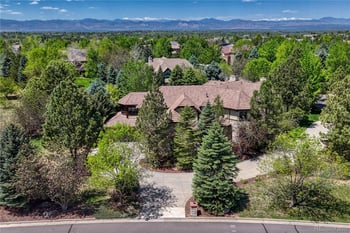
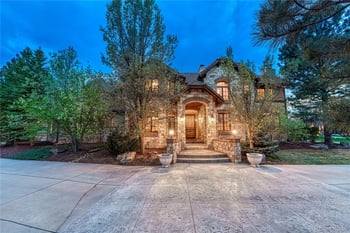
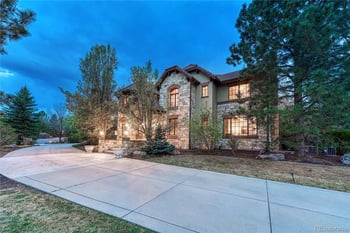
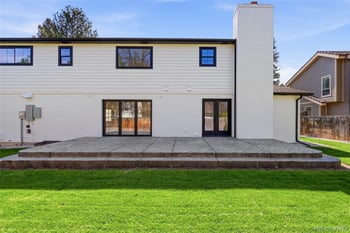
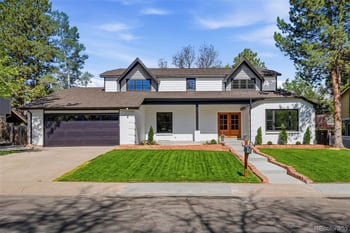
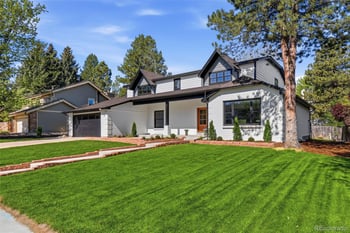
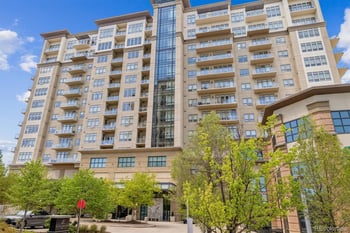
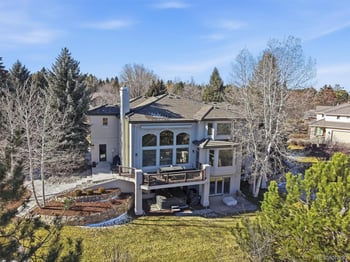
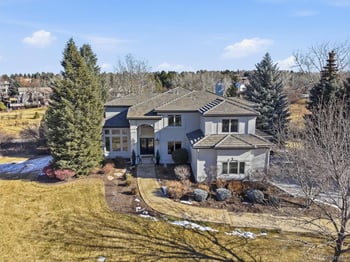
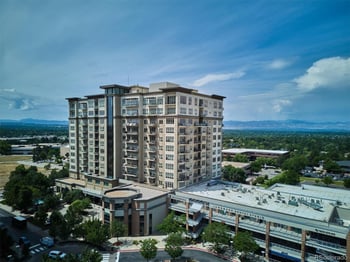
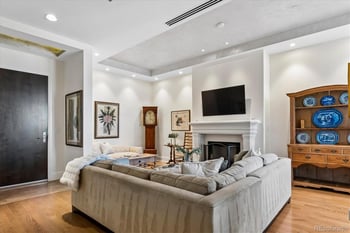
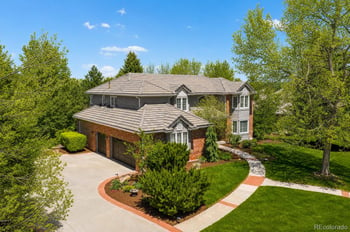
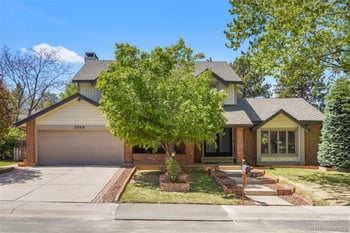
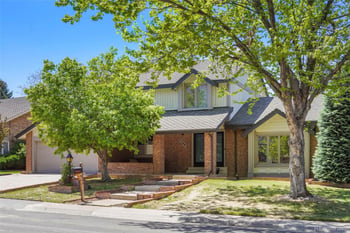
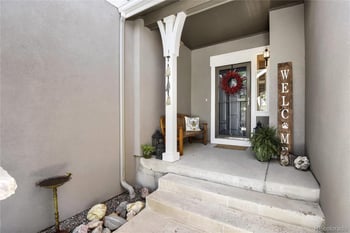
11848 Maplewood Ave, Greenwood Village, CO 80111
MLS#: REC2394326
.jpg)



Every Greenwood Village patio home listing shows a price. Almost none show what you'll actually write checks for every month after closing. The mortgage estimate on Zillow or Realtor.com is a starting point — it omits Arapahoe County property taxes, HOA dues, insurance, and maintenance reserves, which together can add significantly to what you modeled when you first ran the numbers.
That gap is exactly why this article exists. No matching resident voices were found about the real monthly cost of an $800K patio home in Greenwood Village. Buyers searching for real numbers find only listing prices or broad metro averages — not a line-by-line ownership stack for this specific price point and property type. This article builds that stack.
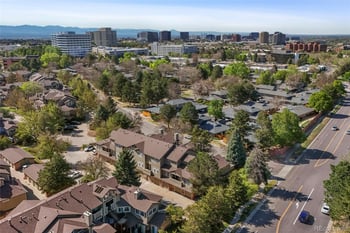
Greenwood Village is a low-density suburb in Arapahoe County, positioned along the Denver Tech Center (DTC) corridor with I-25 as its geographic spine. It's known for ranch-style patio homes in HOA-governed communities, proximity to the Orchard Road commercial corridor, and a price tier that reflects both the address and the DTC adjacency. Most of the patio home inventory clusters near Boston Street, Chenango Avenue, and Park Place — communities that were built specifically for buyers who want shared exterior maintenance and walkable access to the DTC amenity cluster.
The reader's core fear is reasonable: you buy at $800K, you've done the mortgage math, and then you discover the real monthly number is $1,000 or more higher than you planned. That fear is grounded. The HOA dues and Arapahoe County tax structure stack on top of each other in ways that don't show up in any single document until you've already fallen in love with a specific property.
The Five Lines in Your Monthly Ownership Stack
Every section of this article addresses one or more of these:
Before any of those cost lines make sense, you need to understand what kind of community you're buying into — and that starts with what "patio home" actually means in this market. If you want to understand how Colorado labels these property types before evaluating whether the HOA cost structure applies to your specific target, how ranch, patio, and condo styles actually differ in Colorado is worth reading first.
Two $800K patio homes in Greenwood Village can look identical on Zillow and carry monthly HOA costs that differ by $400 or more. The difference isn't in the price — it's in the HOA structure, and that structure determines whether exterior maintenance, landscaping, snow removal, and roof reserves are included in your dues or fall back to you.
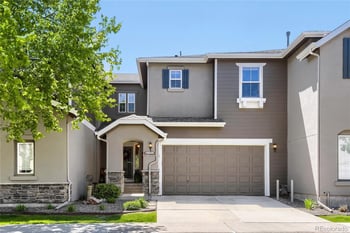
Greenwood Village patio homes are typically single-story or ranch-style detached or semi-detached properties in HOA-governed communities near the DTC. They are not condos — you generally own the land beneath the structure — but they are not fully independent single-family homes either. The HOA's scope is what separates them from a standard house, and that scope varies significantly by community.
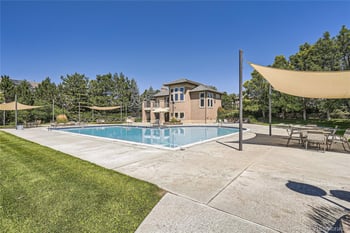
Communities historically associated with the DTC corridor, including areas along Boston Street and Chenango Avenue, tend to carry higher HOA dues in exchange for amenities like pools, clubhouses, and in some cases indoor parking. A community with a lower monthly due may be shifting exterior maintenance costs back to the owner — meaning the "cheaper" HOA is actually a higher total monthly cost once you add what you're now responsible for managing yourself. That's the trade-off most buyers don't see until they've already run the mortgage math and stopped there.
Buyers often receive HOA dues, tax estimates, and insurance figures in separate documents at different stages of the transaction, making it nearly impossible to see the combined monthly impact until after they're under contract. No evidence surfaced on how buyers consistently weigh HOA dues, taxes, insurance, and maintenance together in this specific area — which means you have to build that picture yourself, deliberately, before you're emotionally committed to a specific address.
Patio home HOAs in this tier often include a master insurance policy on the building exterior. That reduces your individual policy cost, but it does not eliminate it. You'll still need an HO6-equivalent policy covering interior fixtures, personal property, and liability — and you need to understand the master policy's deductible, because a high deductible shifts risk back to you in the event of a major claim.
Four Things to Pull from the HOA Resale Disclosure
Colorado law requires sellers to provide the HOA resale disclosure. Request it early — before you're under contract if possible.
Understanding the HOA structure is the prerequisite for every other cost line in the stack. A community with comprehensive exterior coverage has a different maintenance reserve need than one where you hold full exterior responsibility. Once you know what the HOA covers, you can build the actual monthly stack — starting with the largest single line item: your mortgage.
Most right-sizers model their $800K purchase with a mortgage calculator and a rough HOA estimate — and then discover at closing that the real monthly number is significantly higher than they planned. The problem isn't the mortgage calculation. It's the three or four lines that never made it into the model.
No matching resident voices were found about the real monthly cost of an $800K patio home in Greenwood Village, and no evidence surfaced on how buyers in this specific area weigh HOA dues, taxes, insurance, and maintenance together. That absence means you cannot rely on community forums or listing descriptions to surface the real number. You have to build it yourself, line by line, from documents.
The Arapahoe County property tax calculation is not a simple percentage of your purchase price. Colorado uses an assessment ratio — the county assessor determines an assessed value for the property, and the mill levy is applied to that assessed value, not to what you paid. The result can differ meaningfully from what a back-of-envelope percentage would suggest, and buyers who skip the parcel-specific lookup often underestimate their tax bill by hundreds of dollars per month.
To get the actual number, pull the specific parcel's assessed value and current mill levy directly from the Arapahoe County property records portal. Don't use the listing's tax estimate as a planning figure — it may reflect the prior owner's assessed value, which can change after a sale. Also ask whether the prior owner held a senior exemption, which would not transfer to you and would make the listing's tax history an unreliable baseline.
For a patio home in an HOA community, your insurance picture has two layers. The master HOA policy typically covers the exterior shell — the roof, exterior walls, and common areas. Your HO6-equivalent policy covers interior fixtures, personal property, and personal liability. The gap between those two layers is where surprises happen.
Colorado's hail exposure is a real cost variable that neither agents nor buyers consistently flag in the South Denver corridor. The state sits in a documented hail belt, and roof replacement costs — along with the insurance premiums that reflect that risk — are a meaningful line item for right-sizers on fixed or semi-fixed incomes. Confirm with your insurance agent whether the master policy covers hail damage to the roof and what the deductible is before assuming your personal policy cost is minimal. If the master policy carries a high deductible, you may need loss-assessment coverage on your HO6 policy to protect against your share of a large claim.
A well-managed HOA handles exterior maintenance, landscaping, and snow removal — and in Greenwood Village's patio home communities, that is a genuine lifestyle benefit. But HVAC systems, water heaters, interior finishes, and appliances remain your responsibility regardless of HOA scope. These systems don't fail on a schedule, but they do fail, and a right-sizer on a fixed income who hasn't reserved for them absorbs the full cost at the worst possible time.
Right-sizing in South Denver often does not produce meaningful monthly savings when HOA dues replace the maintenance costs you were previously managing yourself. That's worth naming directly: the monthly stack on an $800K patio home may not be dramatically lower than what you were spending on a larger property — it's a different distribution of costs, not necessarily a smaller total.
Monthly Stack: Where Each Number Comes From
The total monthly stack — not the mortgage alone — is the number that determines whether this purchase fits your retirement income or fixed-budget household. Building it line by line before making an offer is the only way to avoid the post-closing surprise. For broader Front Range context on how these cost layers compare across South Denver communities, how HOA fees, taxes, and hidden costs stack up across the Front Range gives useful benchmarks. Once the stack is built, the question becomes whether Greenwood Village's total is justified compared to staying in Centennial or moving to Cherry Hills Village.
For a right-sizer who no longer commutes to the DTC every day, the question isn't whether Greenwood Village is better than Centennial — it's whether the monthly premium is justified by how you actually live now, not how you lived when the DTC commute drove the original location decision.
Both Greenwood Village and Centennial sit in Arapahoe County, which means they share the same taxing jurisdiction at the county level. But both markets can sit in different special districts with different mill levy layers stacked on top of the base county rate. A parcel in one community may carry a different effective tax burden than a parcel in the other, even at the same purchase price. The only reliable way to compare is to pull the specific parcel's assessed value and mill levy from the Arapahoe County property records portal for each candidate property — not to assume parity because both addresses are in Arapahoe County.
No sourced trade-offs were found between staying in Centennial and moving to Greenwood Village from resident accounts. The comparison here is built from structural market facts rather than firsthand experience, so readers should weight their own daily-life priorities against the cost differential rather than treating this as a definitive verdict.
The honest case for Greenwood Village over Centennial: tighter DTC proximity, higher-end HOA community amenities in many communities, and an address that has historically supported resale values in the right-sizer buyer pool. The DTC amenity cluster — The Landmark zone, the coffee corridors along Yosemite Street, access to Cherry Creek State Park trails — is genuinely more walkable and accessible from Greenwood Village's patio home communities than from comparable Centennial addresses.
But here's the reframe that matters for right-sizers specifically: Centennial offers lower HOA fees in many communities, and a right-sizer who no longer commutes to the DTC daily may find that Centennial delivers 80 to 90 percent of the same daily life at a lower monthly cost. The DTC proximity that drove the original Greenwood Village price premium may matter less post-right-sizing, which means the Centennial option deserves a serious monthly-stack comparison before it gets dismissed as less prestigious.
The honest give-up is this: an $800K Greenwood Village patio home will carry a higher monthly stack than a comparable Centennial property at a lower price point. Whether the DTC proximity, community quality, and resale profile justify that premium depends entirely on how much the DTC amenity cluster factors into your daily life after right-sizing. For a direct property-type comparison between the two markets, how main-floor primary homes compare between Centennial and Greenwood Village for right-sizers is worth reviewing before you evaluate the monthly cost differential. And if you want to understand what the daily-life difference actually feels like after the move — which is the real context for deciding whether the premium is worth it — what downsizers notice first in Greenwood Village compared to Centennial and Cherry Hills covers that ground directly.
Centennial isn't the only alternative worth running through this comparison. Cherry Hills Village sits at the other end of the spectrum, and its cost stack looks very different from both.
Cherry Hills Village has a more prestigious address than Greenwood Village — but for a right-sizer who wants to stop managing a large property, that prestige may come with exactly the maintenance burden they were trying to escape. The two markets are not interchangeable options at the same price point. They are built for different buyers with different priorities.
Cherry Hills Village sits at a higher prestige and price tier than Greenwood Village, and patio home inventory there is more limited. Lot sizes are larger, HOA-managed communities are less dense, and the maintenance profile differs significantly from the DTC-adjacent patio home communities in Greenwood Village. At the same $800K purchase price, a Cherry Hills Village property may carry a different tax profile — both cities are in Arapahoe County, but each parcel may sit in different special districts with different levy layers. Verify the specific parcel's mill levy with the county assessor rather than assuming parity.
The non-obvious trade-off: Cherry Hills Village is almost entirely car-dependent for daily errands. There is no walkable commercial corridor equivalent to Orchard Road or The Landmark zone. Every coffee run, grocery trip, and pharmacy visit requires a car. For a right-sizer who valued the DTC's walkable amenity cluster, Cherry Hills Village's land and privacy come at the cost of that daily convenience — and that convenience gap doesn't show up in the monthly stack, but it shapes daily life in ways that matter over a 10-year hold horizon.
Greenwood Village patio homes in HOA communities are purpose-built for right-sizers who want exterior maintenance offloaded to the association. The HOA handles the exterior so you can focus on daily life — Highline Canal Trail walks, DTC dining, weekend routines at Cherry Creek State Park — without managing a property. Cherry Hills Village skews toward buyers who want land, privacy, and a quieter neighborhood character, and who are willing to manage or fund exterior upkeep independently.
The Decision Frame
If your priority is low-maintenance daily life with walkable DTC access: Greenwood Village's HOA-managed patio home communities are the more purpose-fit option. Verify HOA scope and reserve health before committing.
If your priority is land, privacy, and a quieter neighborhood character: Cherry Hills Village is worth investigating — but verify current patio home inventory and be clear-eyed about the car-dependency trade-off and the owner-held maintenance responsibility that comes with larger lots.
No sourced trade-offs were found between Greenwood Village and Cherry Hills Village for right-sizing households from resident accounts. The comparison here is built from structural market differences — HOA community density, lot size profile, patio home inventory, DTC proximity — rather than firsthand experience. Verify current inventory and HOA availability in Cherry Hills Village with a local agent before drawing conclusions. Understanding these trade-offs narrows the decision — but the final question is whether patio home ownership in any of these markets is a sound investment for a right-sizer's financial picture.
A patio home is only a good investment if the monthly stack is sustainable and the exit is clean — and both of those depend on documents most buyers never request before making an offer. The investment question for a right-sizer is not primarily about appreciation. It is about whether the total monthly ownership cost is manageable on a fixed or retirement income over a 7 to 15 year hold horizon, and whether you can exit cleanly when health, finances, or family circumstances change.
Patio homes in Greenwood Village benefit from a durable buyer pool. Right-sizers, empty-nesters, and DTC-adjacent professionals consistently seek low-maintenance ranch-style properties in this corridor. That demand profile — people who want exterior maintenance handled, single-story living, and DTC proximity — is not going away, and it supports resale liquidity relative to more specialized property types. The Cherry Creek School District designation, which covers most of Greenwood Village, also supports resale value for buyers with grandchildren or family considerations, even for households without school-age children.
The South Denver corridor's dominant housing stock from the 1990s build cycle is two-story with the primary bedroom upstairs — which creates an inventory mismatch for right-sizers who require or strongly prefer single-level living. That scarcity of main-floor primary bedrooms in the broader market is actually a demand driver for Greenwood Village's purpose-built patio home communities, where single-story living is the product, not an exception. That scarcity supports the investment case. For context on how the age of a patio home community affects maintenance reserves and HOA funding needs — which directly informs investment durability — how older homes and new construction differ in maintenance reality for Denver right-sizers is worth reading before evaluating a specific community.
A well-priced patio home in a community with an underfunded HOA reserve is a worse investment than a slightly higher-priced home in a community with a fully funded reserve. This is the document that separates those two scenarios: the reserve fund study. Many HOAs built in the 1990s and 2000s are underfunded and carry special assessment risk — and right-sizers on fixed or semi-fixed incomes are poorly positioned to absorb a $15,000 or $20,000 special assessment that arrives two years after closing.
No resident-described scenarios were found for calculating the true monthly payment on a Greenwood Village patio home. Without firsthand accounts of how right-sizers have evaluated the investment case here, the analysis relies on structural market logic — buyer pool durability, HOA reserve health, break-even math — rather than community experience. Seek out recent seller and buyer accounts through a local agent who works specifically in the Greenwood Village patio home market.
How to Request the Reserve Fund Study
Ask the listing agent for the HOA's most recent reserve fund study — not just the reserve fund balance. The study shows whether the current funding level is adequate for projected repairs over the next 20–30 years. A community that is 50% or less funded on its reserve study carries meaningful special assessment risk. If the HOA cannot produce a recent reserve study, that is a reason to walk away or negotiate a price reduction that accounts for the exposure.
Once the investment case is evaluated, the final step is building a verification checklist so you can apply this analysis to any specific property you're considering — before you're emotionally committed to a particular address.
Every surprise on a patio home closing statement traces back to a document that was available before the offer. The most common right-sizer regret is not the purchase price — it's discovering a special assessment, an underfunded reserve, or an insurance gap after closing, all of which are visible in documents available during due diligence.
No firsthand experiences were found about hidden ownership costs, HOA restrictions, or trade-offs tied to patio-home living in Greenwood Village. That absence makes this checklist more important, not less. You cannot rely on community forums or neighbor accounts to surface surprises. The document-based verification workflow is the only reliable path to a complete monthly picture before closing.
Pre-Offer Verification Checklist
1. HOA Resale Disclosure
Request from the listing agent or HOA management. Confirm: current dues, reserve fund balance, pending or recently approved special assessments, and master insurance policy scope and deductible. Colorado law requires sellers to provide this document.
2. Reserve Fund Study
Request the most recent study from the HOA. Look for the funding percentage — a community at 50% or below carries elevated special assessment risk. If no recent study exists, escalate before proceeding.
3. Master Insurance Declarations Page
Ask for the declarations page directly — not a summary from the listing agent. Confirm the coverage boundary (exterior shell vs. interior), the deductible, and whether hail damage is covered. Share with your insurance agent before writing an offer.
4. Parcel-Specific Tax Verification
Pull the specific parcel's assessed value and current mill levy from the Arapahoe County property records portal. Do not use the listing's tax history. Confirm whether the prior owner held a senior exemption that would not transfer to you.
5. Lender Rate Lock and Payment Estimate
Get a written payment estimate from your lender at your actual down payment and current rate — not a published average. This is your principal and interest line.
6. Insurance Quote from Your Agent
After reviewing the master policy, get a quote for your HO6-equivalent policy covering interior fixtures, personal property, liability, and loss assessment. Colorado's hail exposure is a real premium variable — confirm your carrier's approach to roof claims in Arapahoe County.
7. Maintenance Reserve Planning Figure
Identify the systems the HOA does not cover — HVAC, water heater, appliances, interior finishes — and build a monthly reserve figure for those items. This is your maintenance line in the stack.
Build your full monthly stack from these verified documents before you are emotionally committed to a specific property. Compare the verified total against your income or retirement distribution to confirm sustainability over your intended hold horizon — not just affordability at closing.
If you're comparing Greenwood Village against Centennial or Cherry Hills Village, run the same verification workflow for each candidate property. The stack differences between markets are real, but they are parcel-specific — not community-level guarantees. For right-sizers evaluating Greenwood Village for the first time, particularly those coming from out of state, how Colorado's winter realities affect maintenance costs and daily life in South Denver is worth reading before finalizing the maintenance reserve line in your stack. And for a grounded picture of what daily life in Greenwood Village actually looks like for right-sizers — which is the context that makes the monthly cost either worth it or not — how Greenwood Village fits right-sizers on daily life, convenience, and home options covers the lifestyle side of the decision.
With a verified monthly stack in hand, the decision between Greenwood Village, Centennial, and Cherry Hills Village becomes a comparison of real numbers against real priorities — not a guess made from a listing page and a mortgage calculator.
Your Real Estate Expert. Regarding real estate in the Denver Metro market, you deserve an expert who places your needs above all else. I'm Brian Burke, a licensed REALTOR® and seasoned real estate broker and owner of Kenna Real Estate with over two decades of experience. I've helped hundreds of home buyers and sellers navigate every transaction, and my comprehensive industry knowledge spans from appraisal to mortgage to real estate expertise.
My dedication to excellence has earned me recognition as a pricing specialist. This allows me to find the best solutions for even the most unconventional transactions to benefit my clients. Consider me your trusted Real Estate advisor for your next transaction, whether it's for yourself, a loved one, or a friend. Always choose an agent who aligns with your needs, even if that means exploring other options.
You may not be aware that I've held a REALTOR® license since 2002, dedicating my time to becoming an authority in all aspects of Residential Real Estate and Construction. In addition, I established my own Real Estate brokerage firm, providing comprehensive 360-degree Real Estate services, from the initial acquisition of a client's first Real Estate asset to the disposition of their entire Real Estate portfolio.
My commitment is unwavering in delivering top-notch service that consistently exceeds my clients' expectations, whether you're selling or buying. Even after the transaction is complete, I remain your lifelong REALTOR®, ready to assist you at any time. When you, your family, or friends choose me as your Real Estate agent, I promise to be the best agent you've ever worked with in the Real Estate industry.
Proudly serving Arapahoe, Douglas, El Paso, Denver, Jefferson, Weld, Lairmer, Elbert, Broomfield, Boulder, and Adams Counties! I have a team of anents in most Colorado cities from Fort Collins, to Grand Junction, to Denver, and Colorado Springs.
This is what You Get when I sell your house:
When it comes to your real estate, trust in a dedicated professional who puts your goals first. Contact me, Brian Lee Burke, today, and let's turn your real estate dreams into reality.